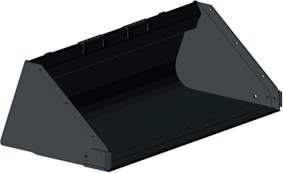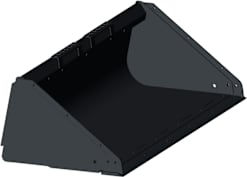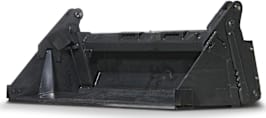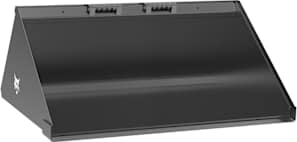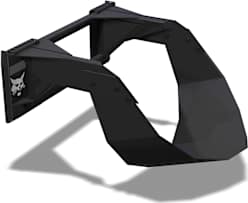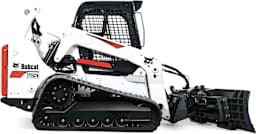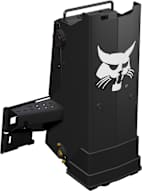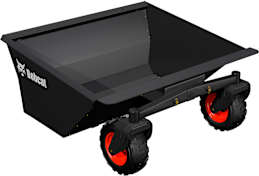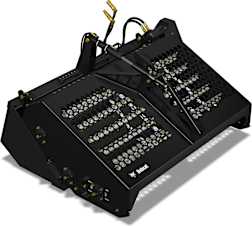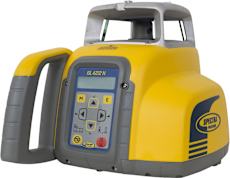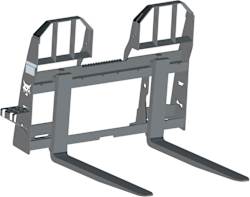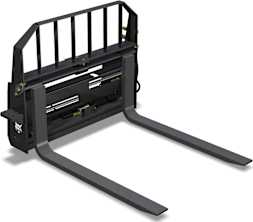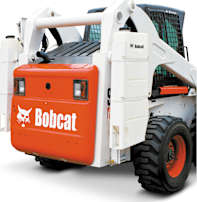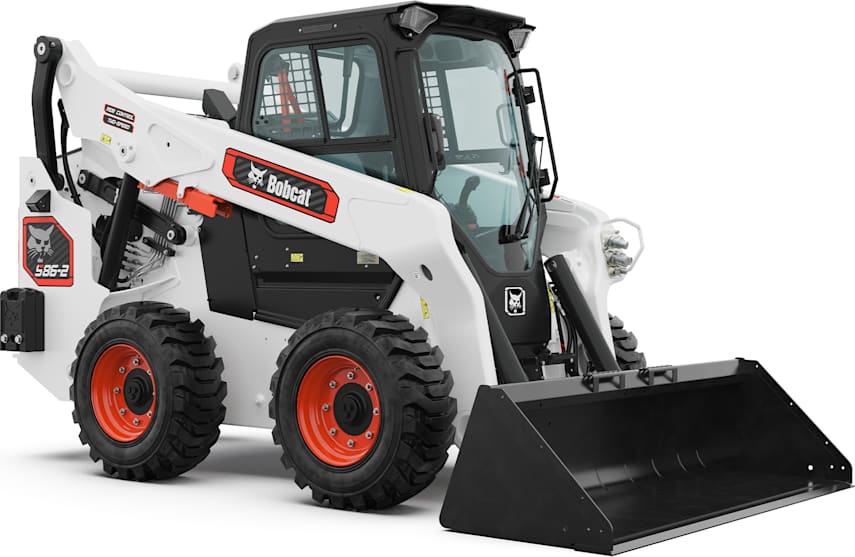
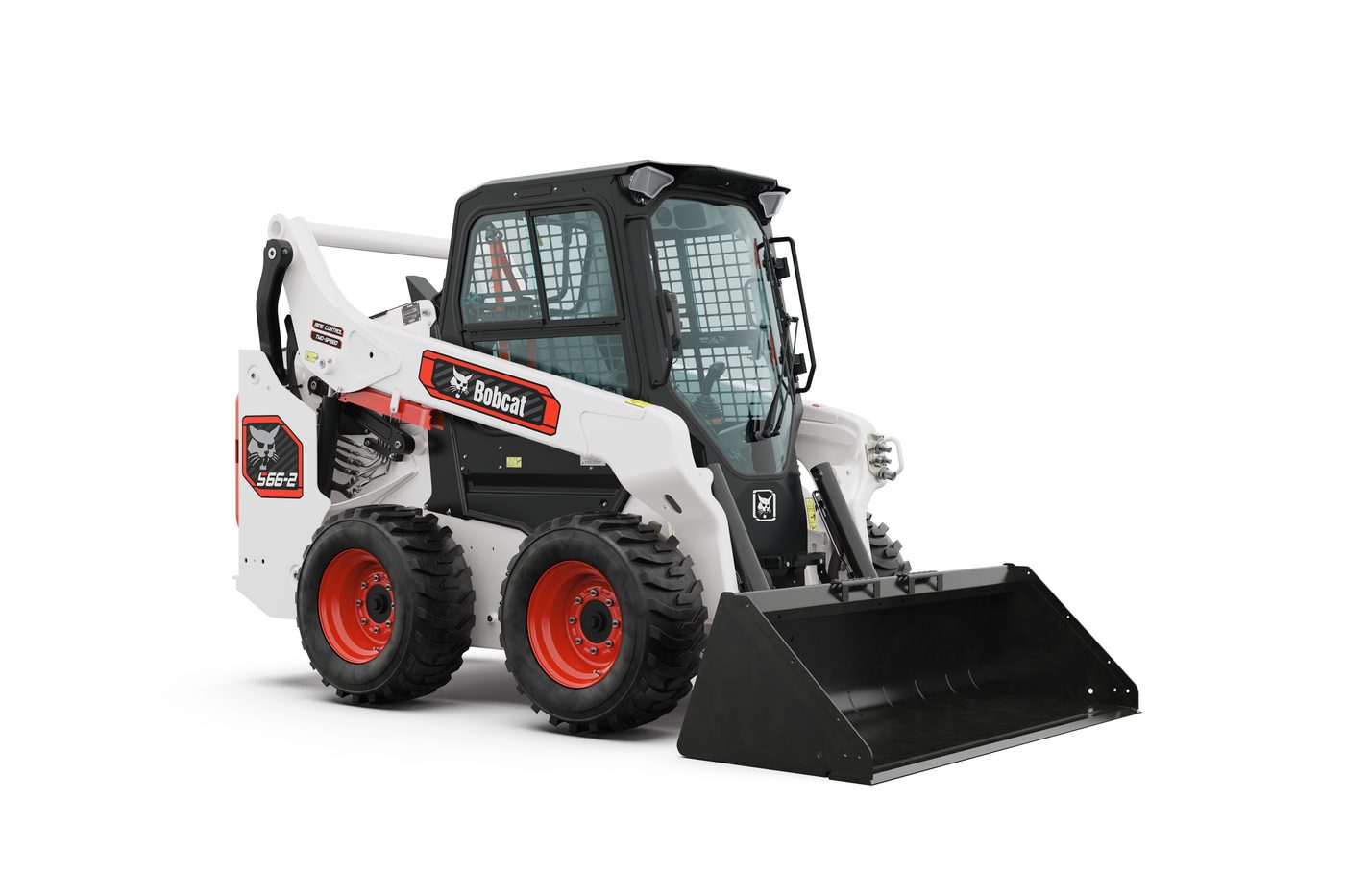
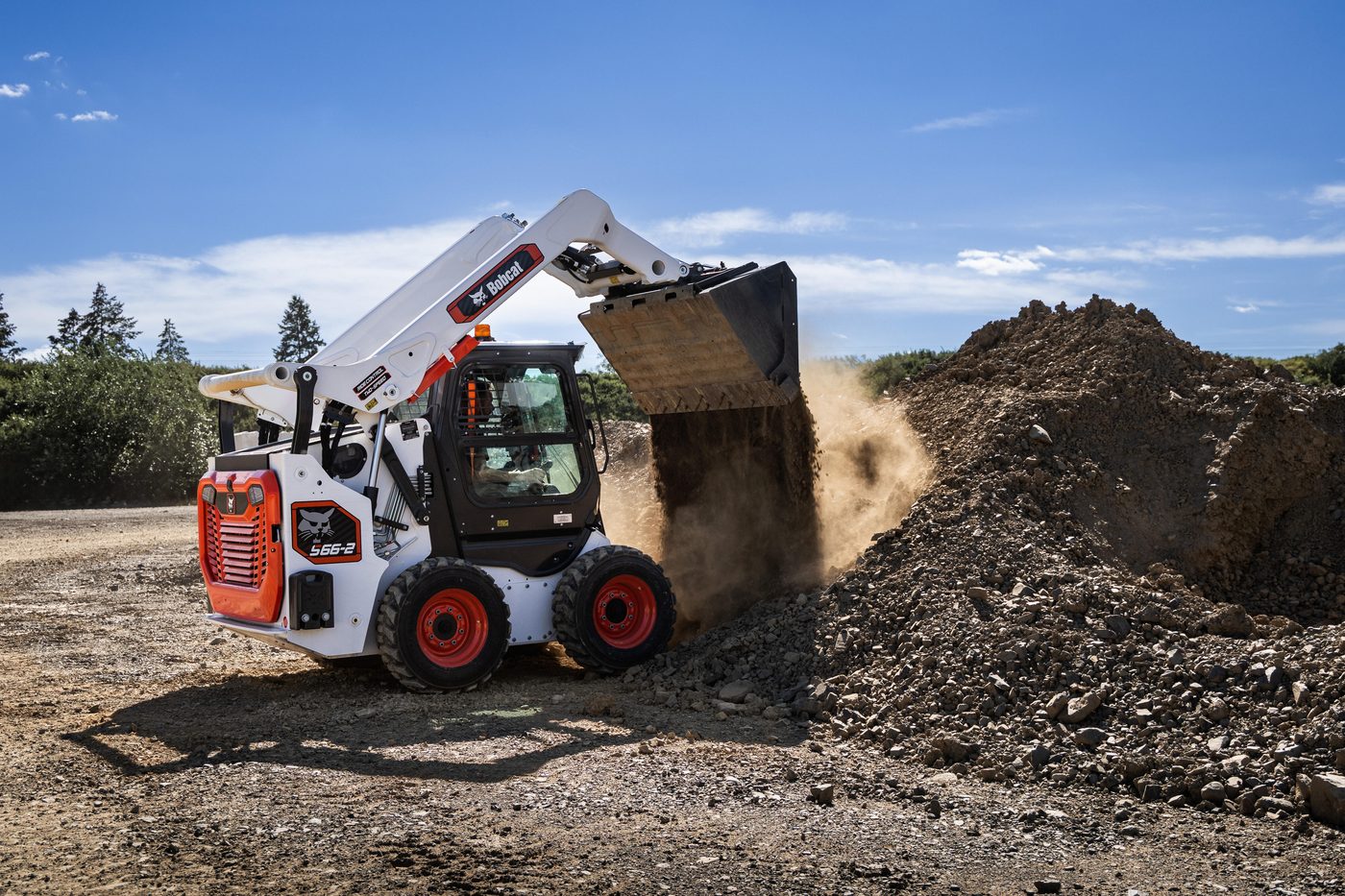
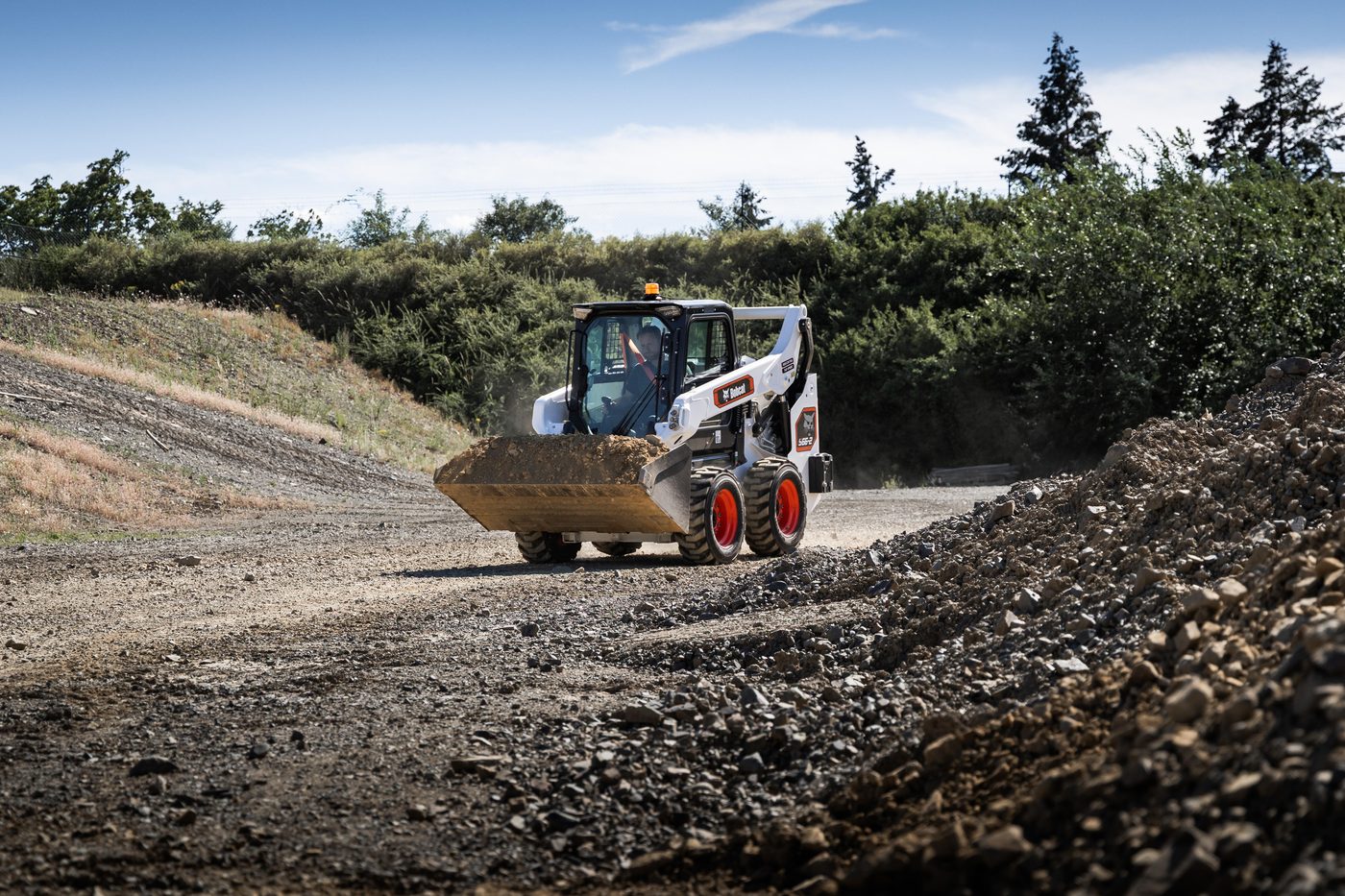
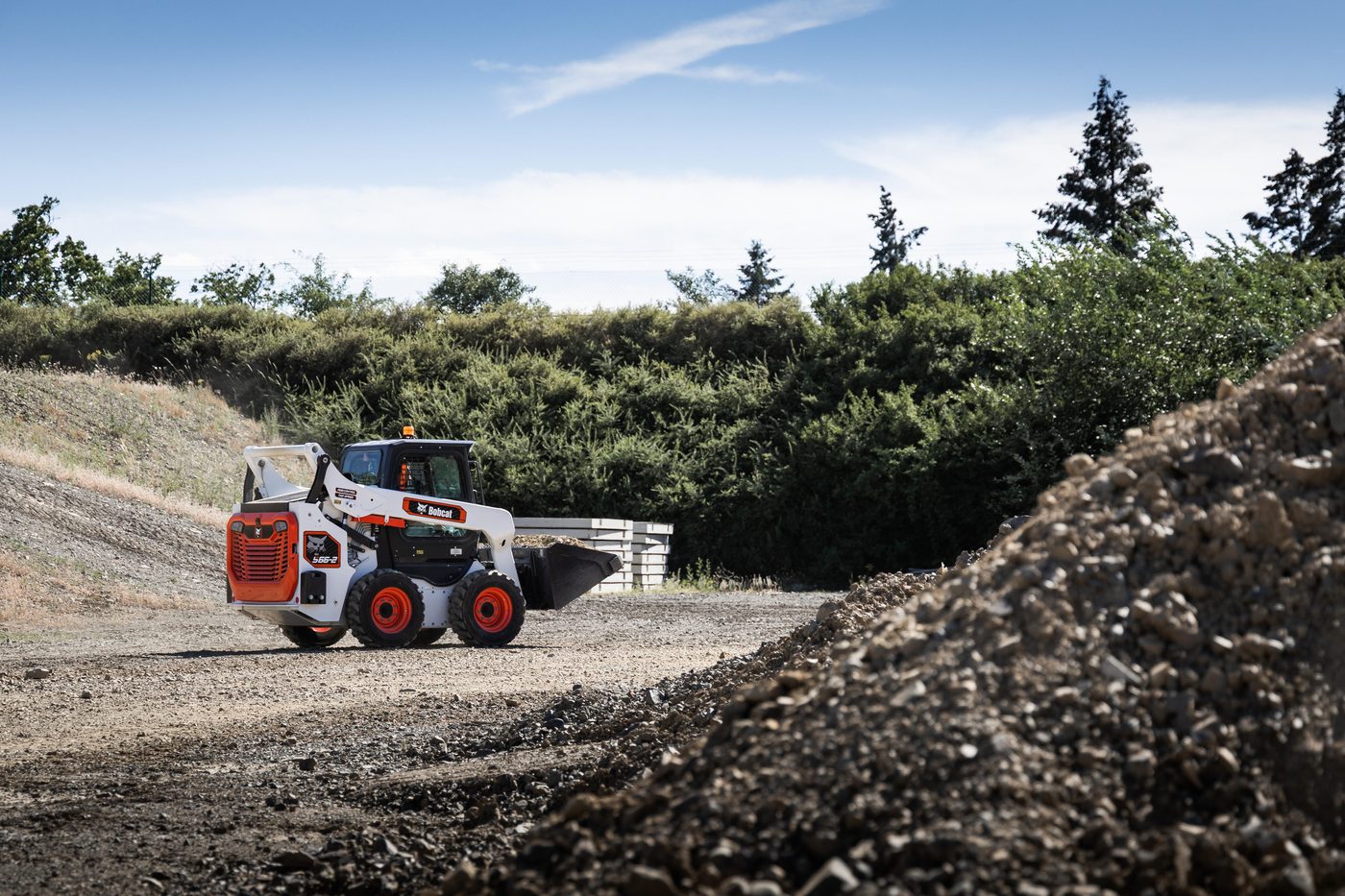
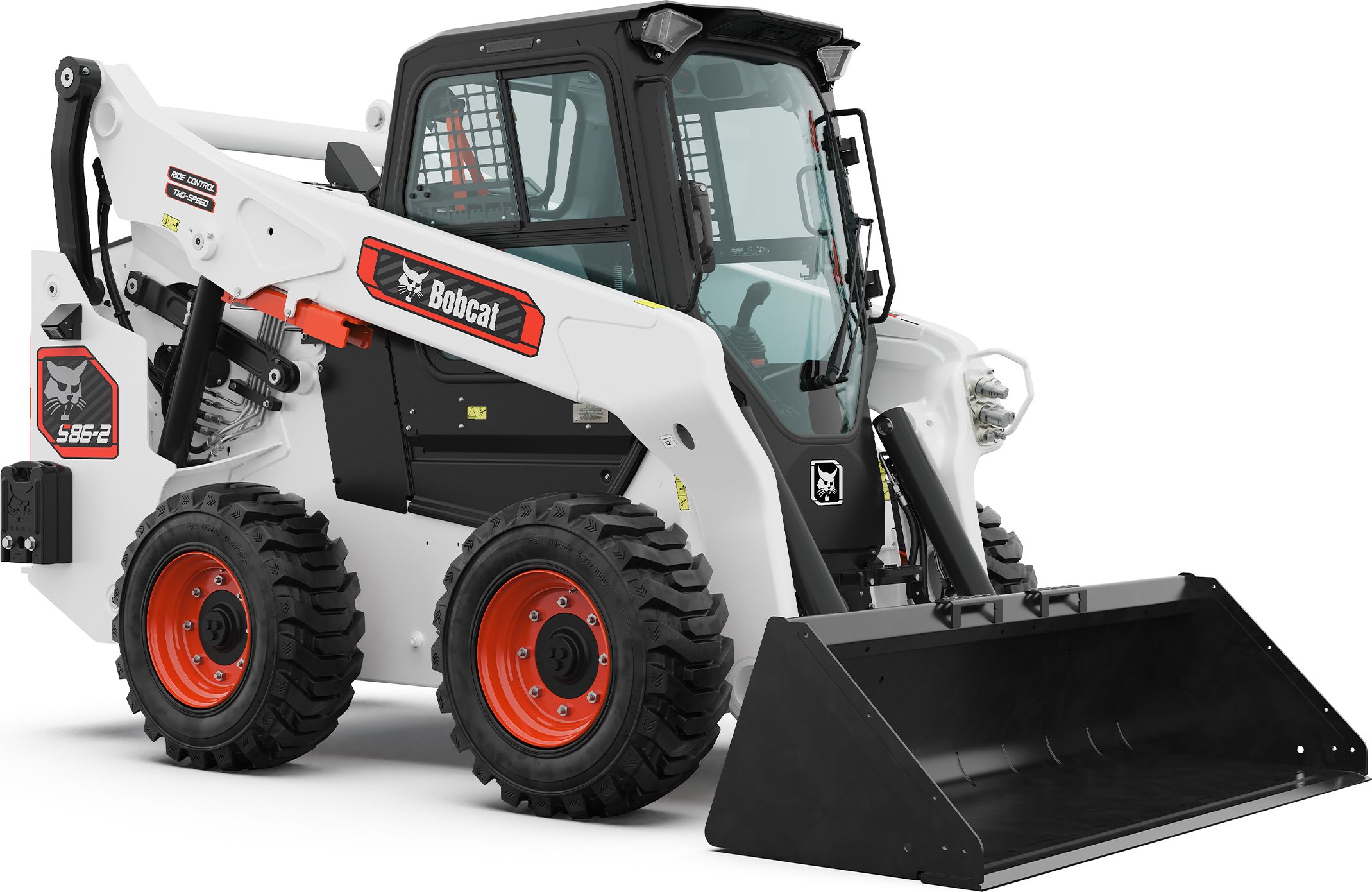
The large-frame S86-2 skid-steer loader gives you more of what helps on bigger jobs: a 12-foot lift height and increased output of 115 HP.
R-Series loaders feature an efficient, maintenance-friendly engine with an innovative fuel system for maximum uptime. For even greater performance, the S86-2 now boasts 115 HP. This power boost enhances heavy-duty lifting, driving, and hydraulic functions, ensuring superior productivity when running demanding high-flow attachments in tough conditions.
The Super Flow and 5-block coupler take auxiliary flow up to 159 l/min and increase pressure to 28.3 MPa. This offers up to 20% more productivity and efficiency.
All components are well-protected against debris, allowing you to take on the toughest jobs without compromising uptime.
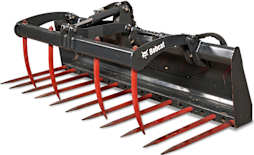
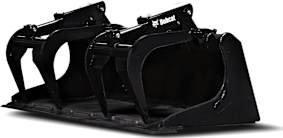
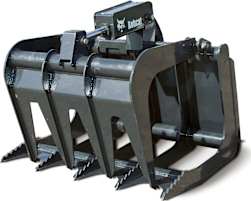
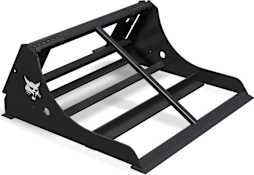
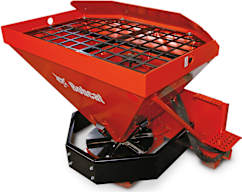
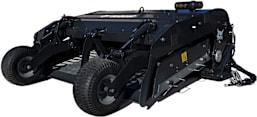
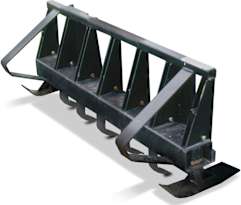
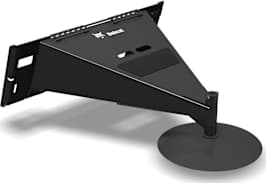
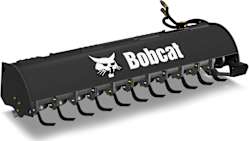
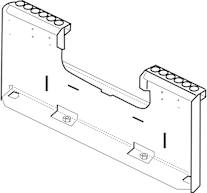
With the standard Bob-Tach® mounting system, you can change an attachment on your loader in less than a minute. Easily swap between different attachments, such as a bucket, auger, landscape rake, or grapple, throughout your day. The Power Bob-Tach® allows some attachments to be connected and removed without leaving the seat, using switches conveniently located in the cab.
The Five Coupler Block, included with the Super Flow option, allows a flexible approach to running different attachments. From one common source, you can attach standard or high-flow approved attachments to the standard-sized 1/2-inch quick couplers. When using Super Flow, the 3/4-inch couplers maximize performance and productivity with approved advanced attachments.
Machines in one range are compared against each other — these are the four figures the choice usually comes down to.
The flagship: 1,587 kg rated operating capacity, 115 hp (up from 105), 3,175 kg tipping load and the Super Flow system. The only machine in the range with the five-coupler block — built for heavy attachments.
| Engine power | Hydraulic flow | Lift height | Tipping load | |
|---|---|---|---|---|
| S66-2 | 74 hp | 102 l/min | 3,0 m | 2 268 kg |
| S76-2 | 74 hp | 115 l/min | 3,3 m | 2 722 kg |
| S86-2this model | 115 hp | 159 l/min | 3,7 m | 3 175 kg |
Source: B4503710-EN (08-2026)
Both generations sit side by side in the catalogue and the names differ by two characters — here is what actually changed.
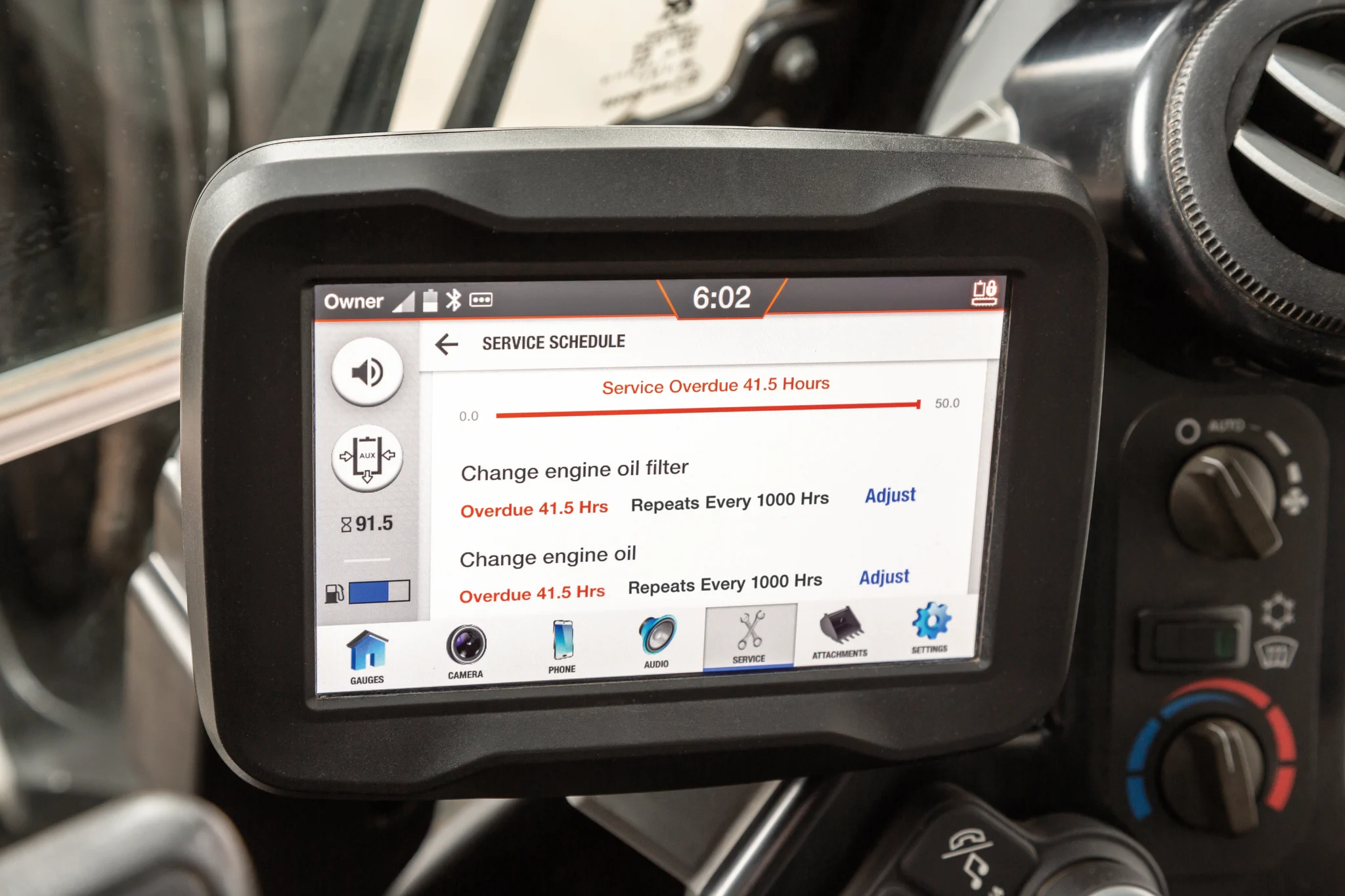
The 8-inch glove-friendly touchscreen is standard rather than optional. Split-screen for multiple camera views, Bluetooth phone pairing and up to 20 saved operator profiles.
Balanced, Agile, Dynamic and Charged — match the machine's responsiveness to the task, from smooth precision to instant reaction. The previous generation had no such choice.
On the S86-2 the reversing camera is standard, on the S66-2 and S76-2 it is optional; side cameras are new to this generation as well.
Integrated radio, a more powerful speaker setup, USB-C ports and active noise cancelling on calls.
115 hp against the S86's 105 hp, and 3,657 mm to the bucket hinge pin against 3,353 mm.
The whole range side by side — you can see what each step up actually buys.
| S66-2 | S76-2 | S86-2 | |
|---|---|---|---|
| Tipping load (ISO 14397-1) kg | 2 268 | 2 722 | 3 175 |
| Rated operating capacity (ISO 14397-1) kg | 1 134 | 1 361 | 1 587 |
| Lift arm path | vertical | vertical | vertical |
| S66-2 | S76-2 | S86-2 | |
|---|---|---|---|
| Pump capacity, Std Flow l/min | 66,5 | 88,1 | 89,3 |
| Pump capacity, High Flow l/min | 101,8 | 114,7 | 138,5 |
| Pump capacity, Super Flow l/min | — | — | 159 |
| System relief at quick couplers MPa | 23,8 – 24,5 | 23,8 – 24,5 | 23,8 – 24,5 |
| S66-2 | S76-2 | S86-2 | |
|---|---|---|---|
| Engine | Bobcat 2.4 l, 97/68 EC Stage V | Bobcat 2.4 l, 97/68 EC Stage V | D34 BSH SV, 97/68 EC Stage V |
| Power at 2,600 rpm (ISO 14396) kW | 55,2 | 55,2 | 82 |
| Torque at 1,800 rpm (ISO 14396) Nm | 280 | 280 | 426 |
| Number of cylinders | 4 | 4 | 4 |
| Displacement cm³ | 2 400 | 2 400 | 3 409 |
| Fuel tank l | 107 | 120 | 120 |
| Fuel / cooling | diesel / liquid | diesel / liquid | diesel / liquid |
| S66-2 | S76-2 | S86-2 | |
|---|---|---|---|
| Breakout force — boom kg | 2 033 | — | — |
| Breakout force — bucket kg | 2 290 | — | — |
| Push force daN | 2 773 | 3 183 | 3 823 |
| S66-2 | S76-2 | S86-2 | |
|---|---|---|---|
| Raise lift arms s | 3,8 | 4,5 | 4,5 |
| Lower lift arms s | 2,2 | 2,9 | 3,0 |
| Bucket rollback s | 1,6 | 1,6 | 2,0 |
| Bucket dump s | 2,3 | 2,2 | 2,8 |
| S66-2 | S76-2 | S86-2 | |
|---|---|---|---|
| Travel speed, low range km/h | 11,8 | 10,9 | 11,1 |
| Travel speed, high range km/h | 17,7 | 19 | 19,8 |
| S66-2 | S76-2 | S86-2 | |
|---|---|---|---|
| Operating weight kg | 3 262 | 3 744 | 4 497 |
| Shipping weight kg | 2 948 | 3 422 | 4 096 |
| S66-2 | S76-2 | S86-2 | |
|---|---|---|---|
| Operating height (A) mm | 3 910 | 4 252 | 4 345 |
| Height with operator cab (B) mm | 2 045 | 2 079 | 2 111 |
| Angle of departure (C) ° | 25 | 27 | 26 |
| Ground clearance (D) mm | 188 | 218 | 218 |
| Wheelbase (E) mm | 1 133 | 1 226 | 1 304 |
| Length without attachment (F) mm | 2 718 | 2 894 | 3 059 |
| Length with standard bucket (G) mm | 3 427 | 3 607 | 3 783 |
| Rollback at ground position (H) ° | 30 | 30 | 30 |
| Dump height with standard bucket (I) mm | 2 396 | 2 609 | 2 980 |
| Height to bucket hinge pin (J) mm | 3 048 | 3 259 | 3 657 |
| Dump reach at maximum height (K) mm | 869 | 850 | 864 |
| Dump angle at maximum height (L) ° | 37 | 37 | 39 |
| Rollback fully raised (M) ° | 94 | 94 | 98 |
| Width with standard bucket (N) mm | 1 727 | 1 880 | 1 880 |
| Turning radius with standard bucket (O) mm | 2 033 | 2 126 | 2 211 |
| Track, standard tires (P) mm | 1 407 | 1 584 | 1 585 |
| Width with standard tires (Q) mm | 1 642 | 1 829 | 1 829 |
| S66-2 | S76-2 | S86-2 | |
|---|---|---|---|
| Operator position noise (ISO 6396 / ISO 4871) dB(A) | 78 | 77 | 79 |
| Bystander noise (ISO 6395) dB(A) | 101 | 101 | 103 |
| Whole body vibration (ISO 2631-1), high speed m/s² | 0,80 | 0,80 | 0,59 |
| Hand-arm vibration (ISO 5349-1 and 5349-2) m/s² | 0,76 | 1,16 | 2,78 |
Source: B4503710-EN (08-2026)
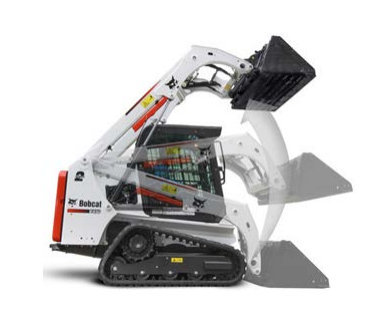
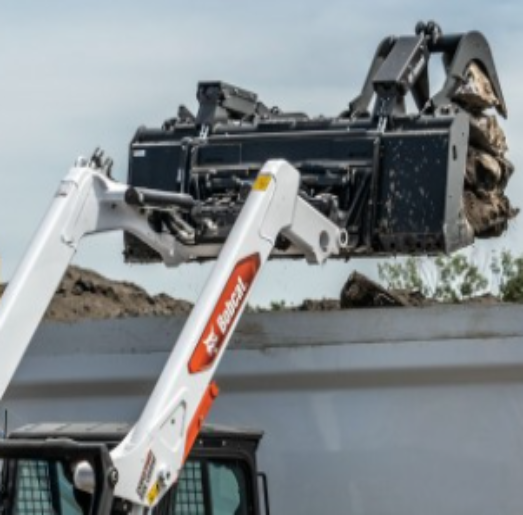 Increased Lifting Capabilities
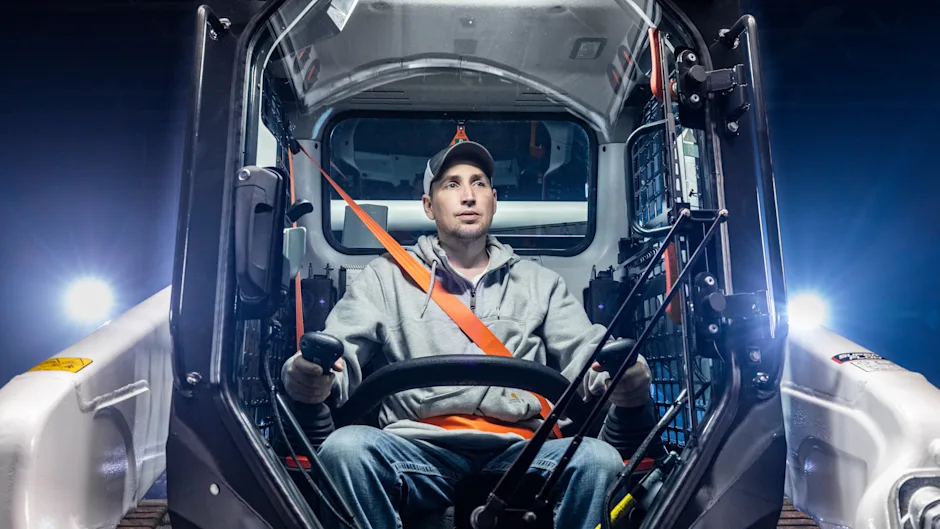 Intuitive Controls
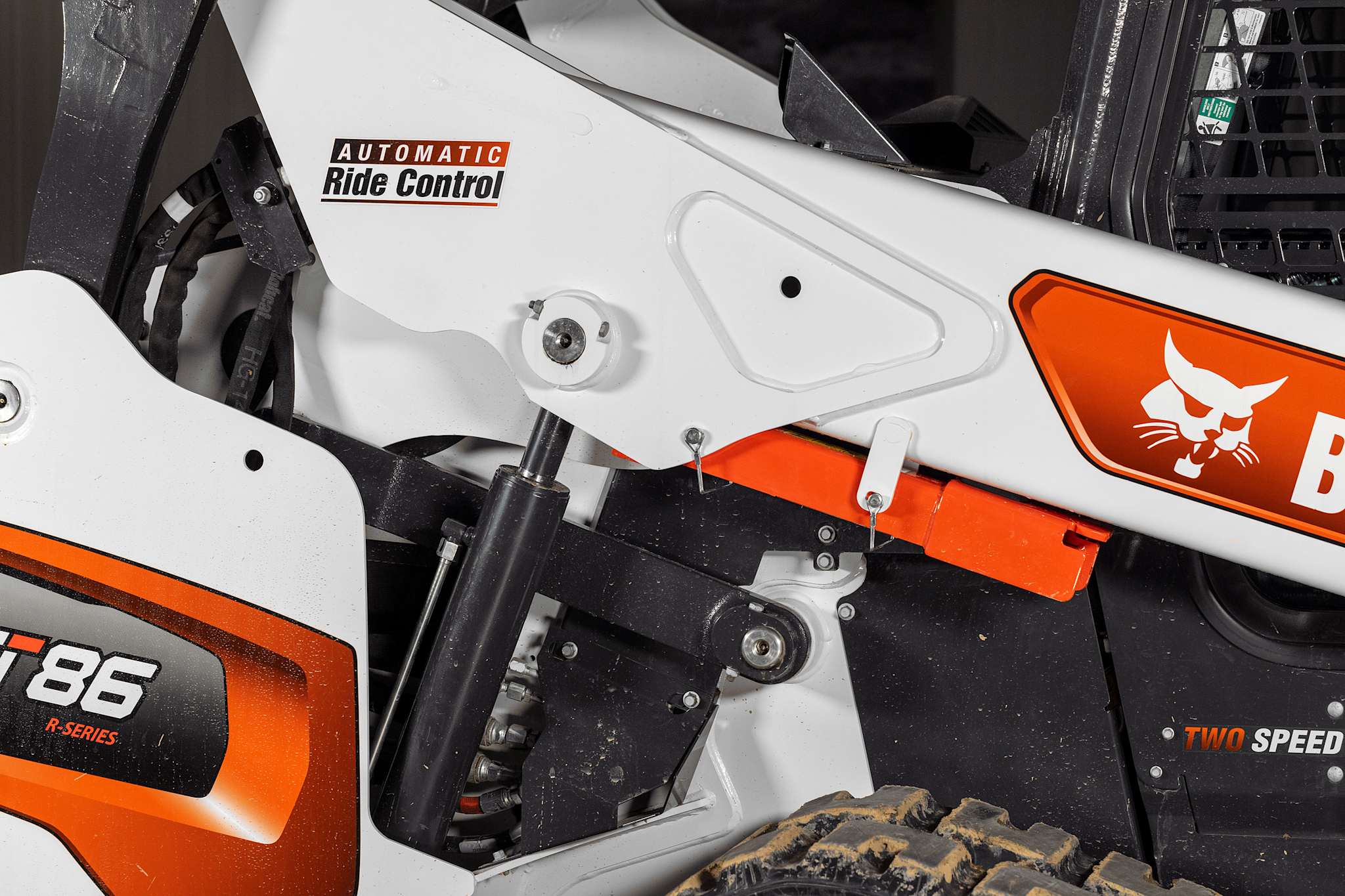 Automatic Ride Control
 Two Speed Travel
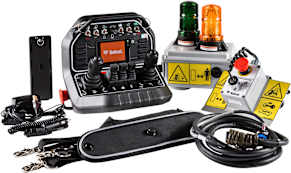
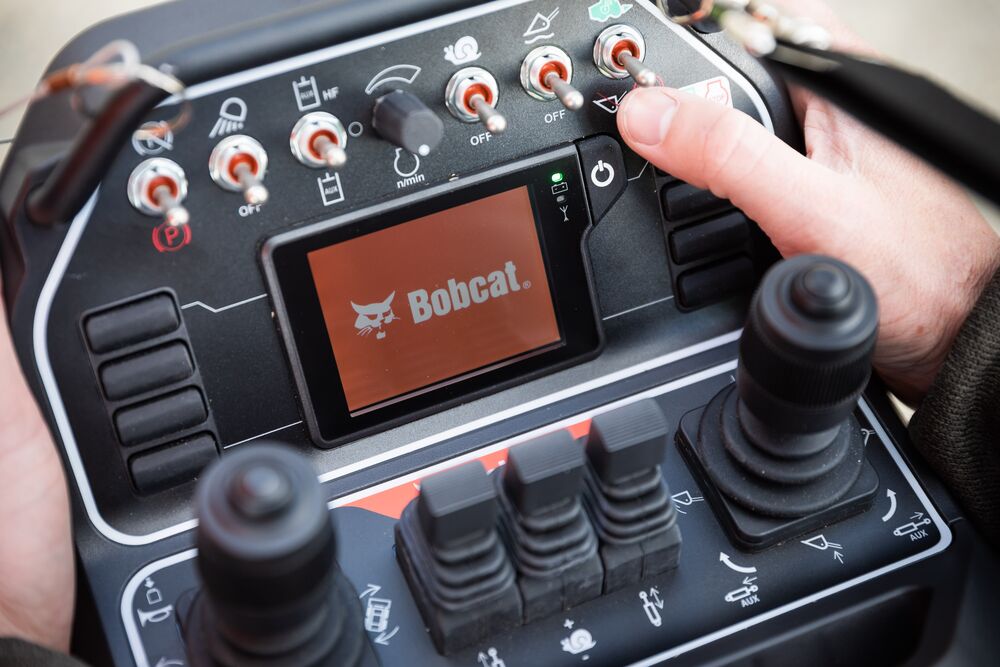 Remote Control
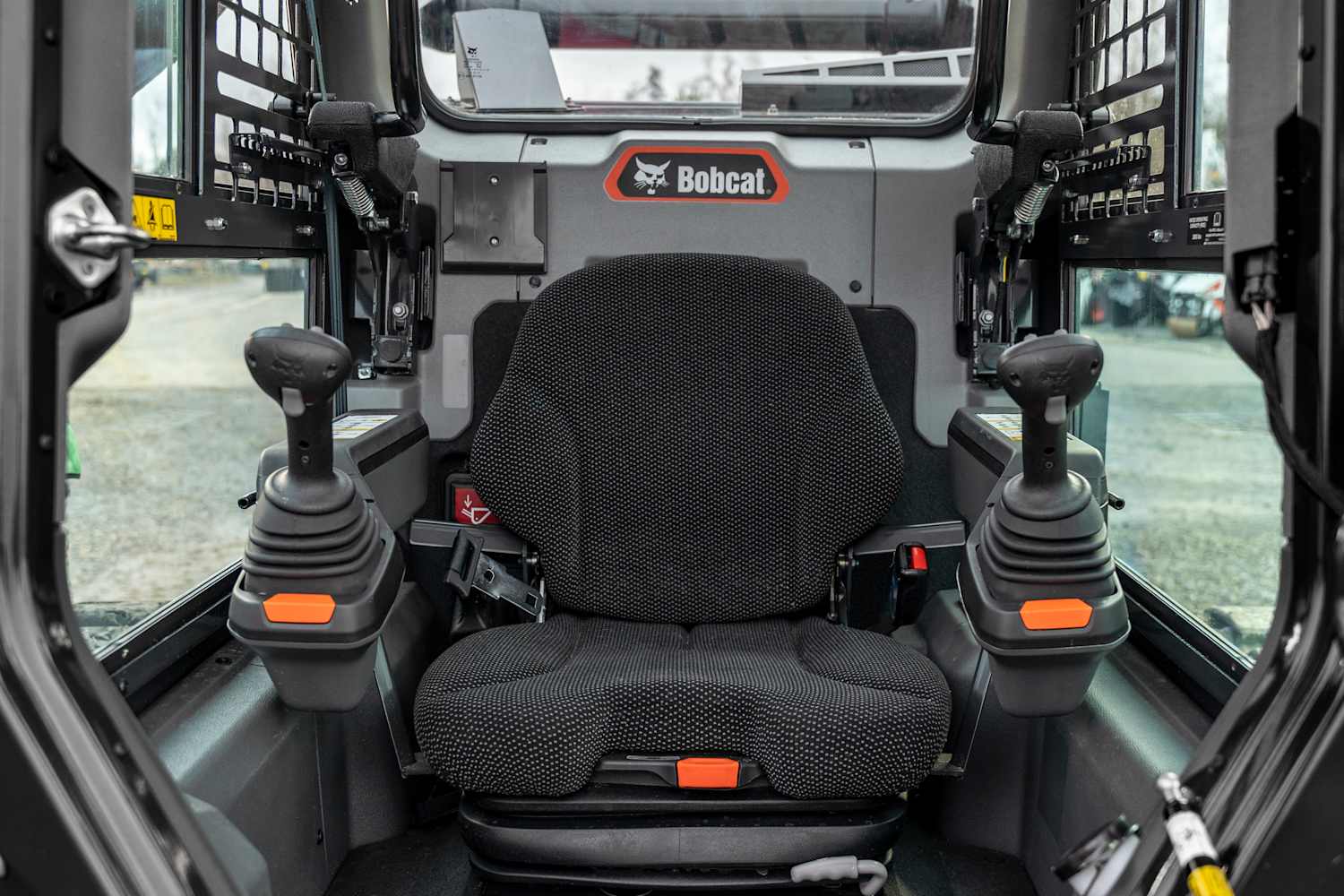 Selectable Joystick Controls
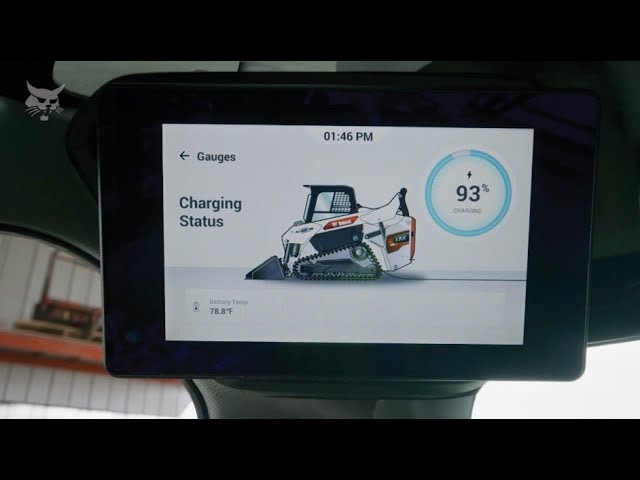 8 Inch Color Touchscreen Display
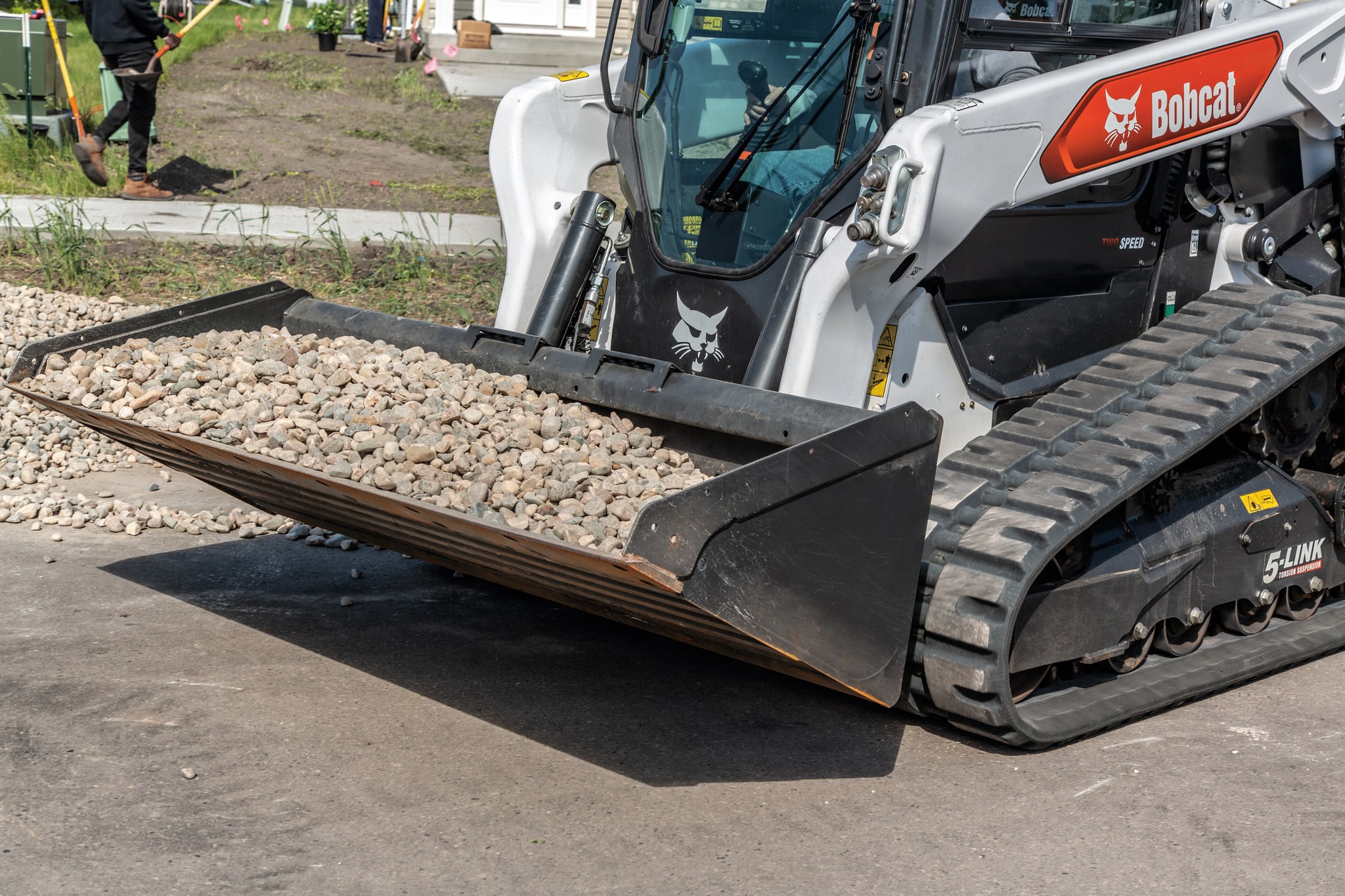 Dual Direction Bucket Positioning
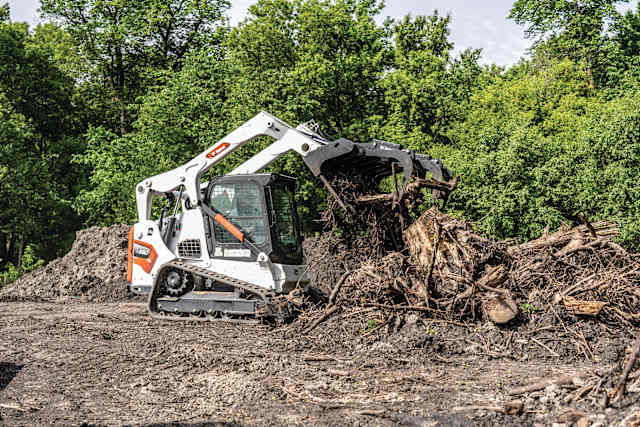 Superior Lift Arms
 HVO Ready
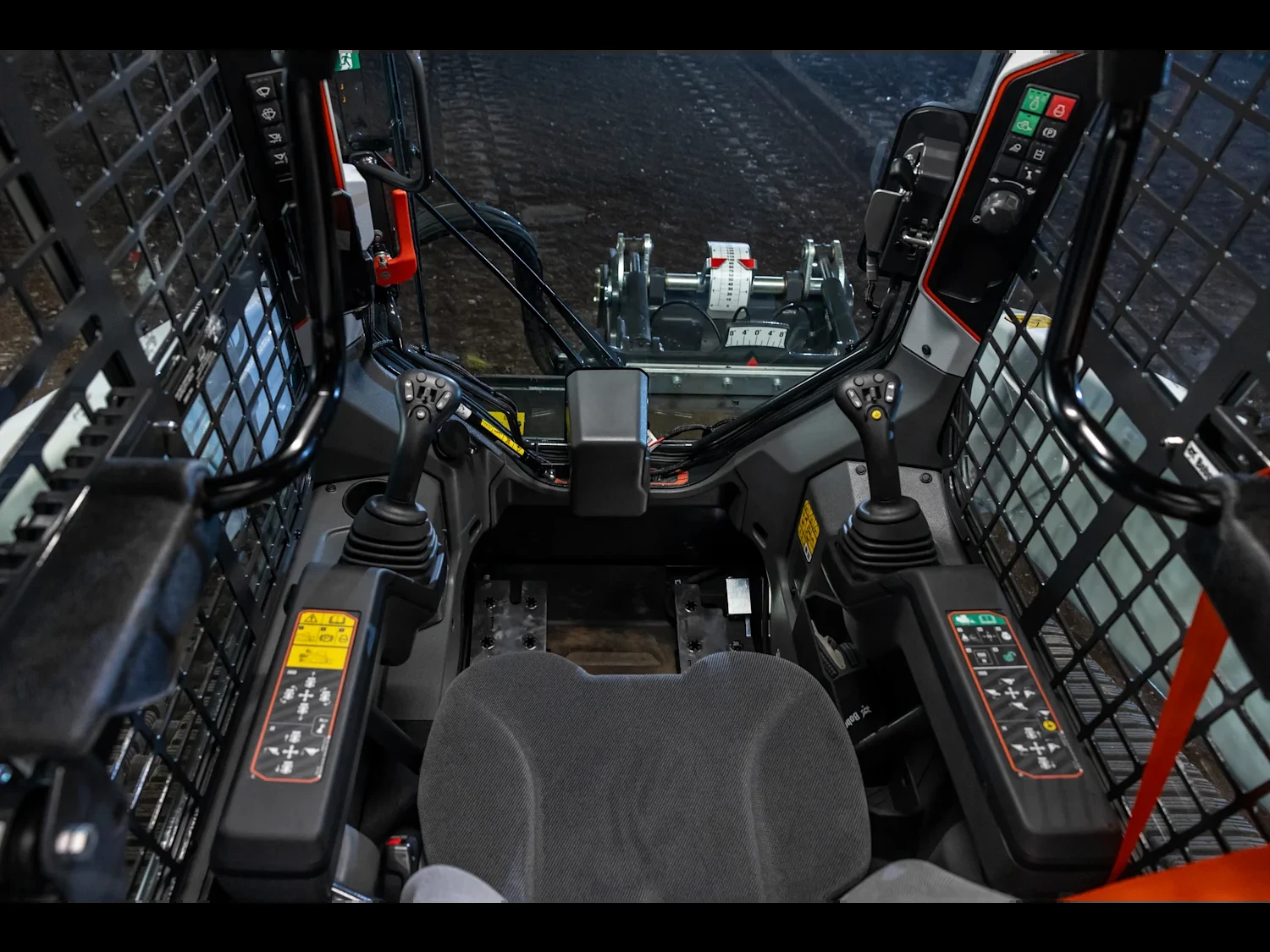 Sound Dampening Features
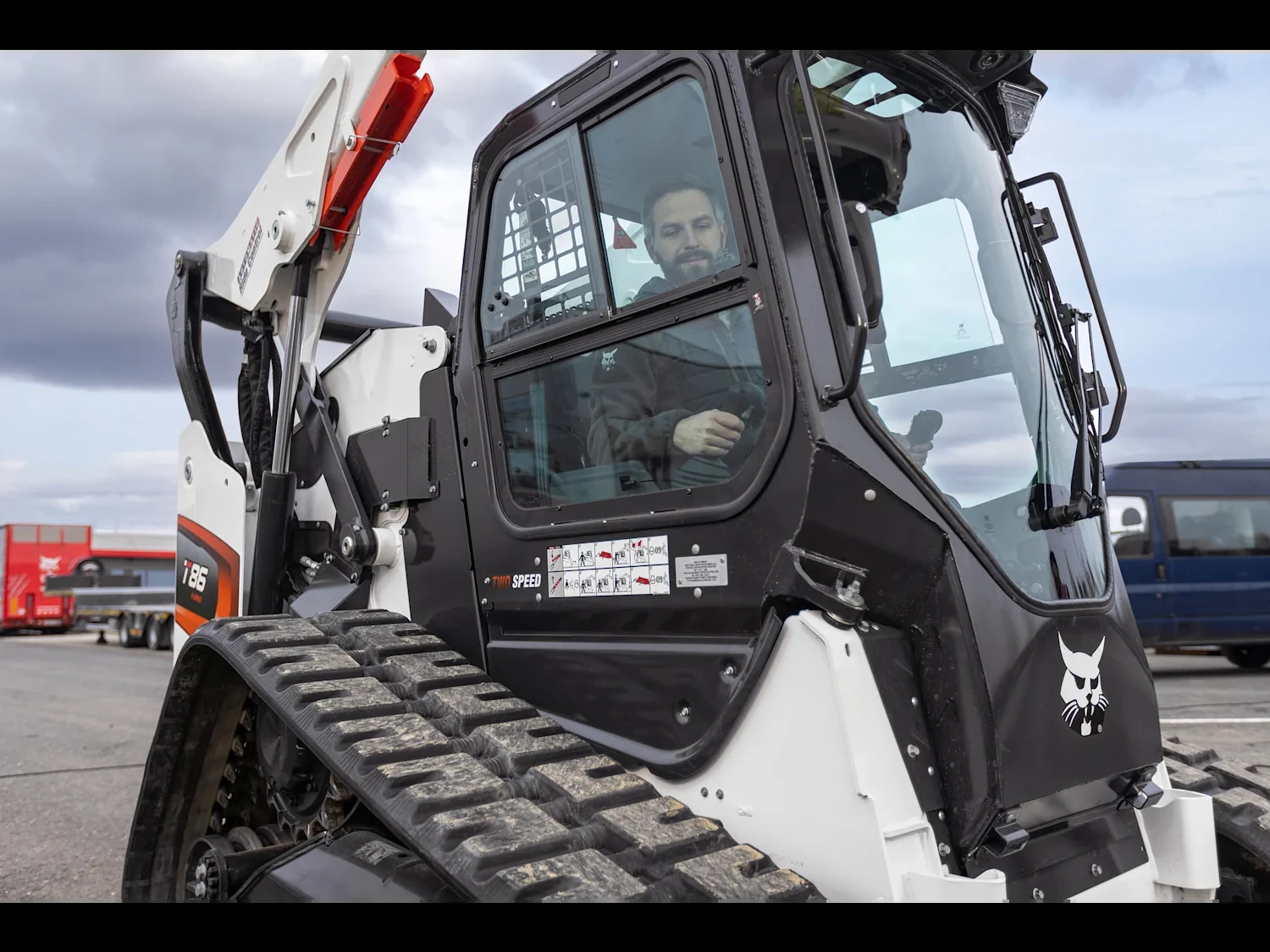 Clear Visibility
 Hydraulically Cushioned CylindersGrease Point Access
 Improved Engine Uptime
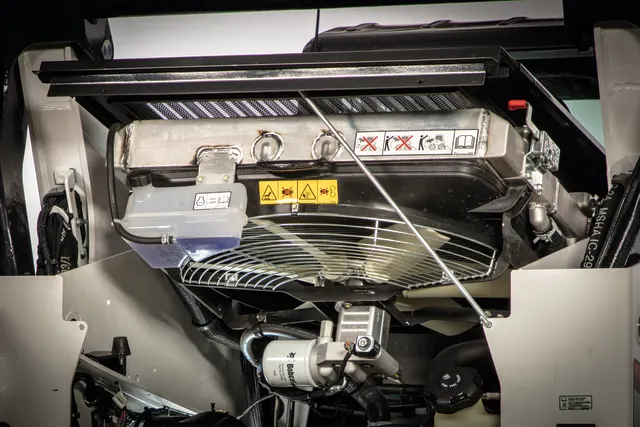 Improved Cooling
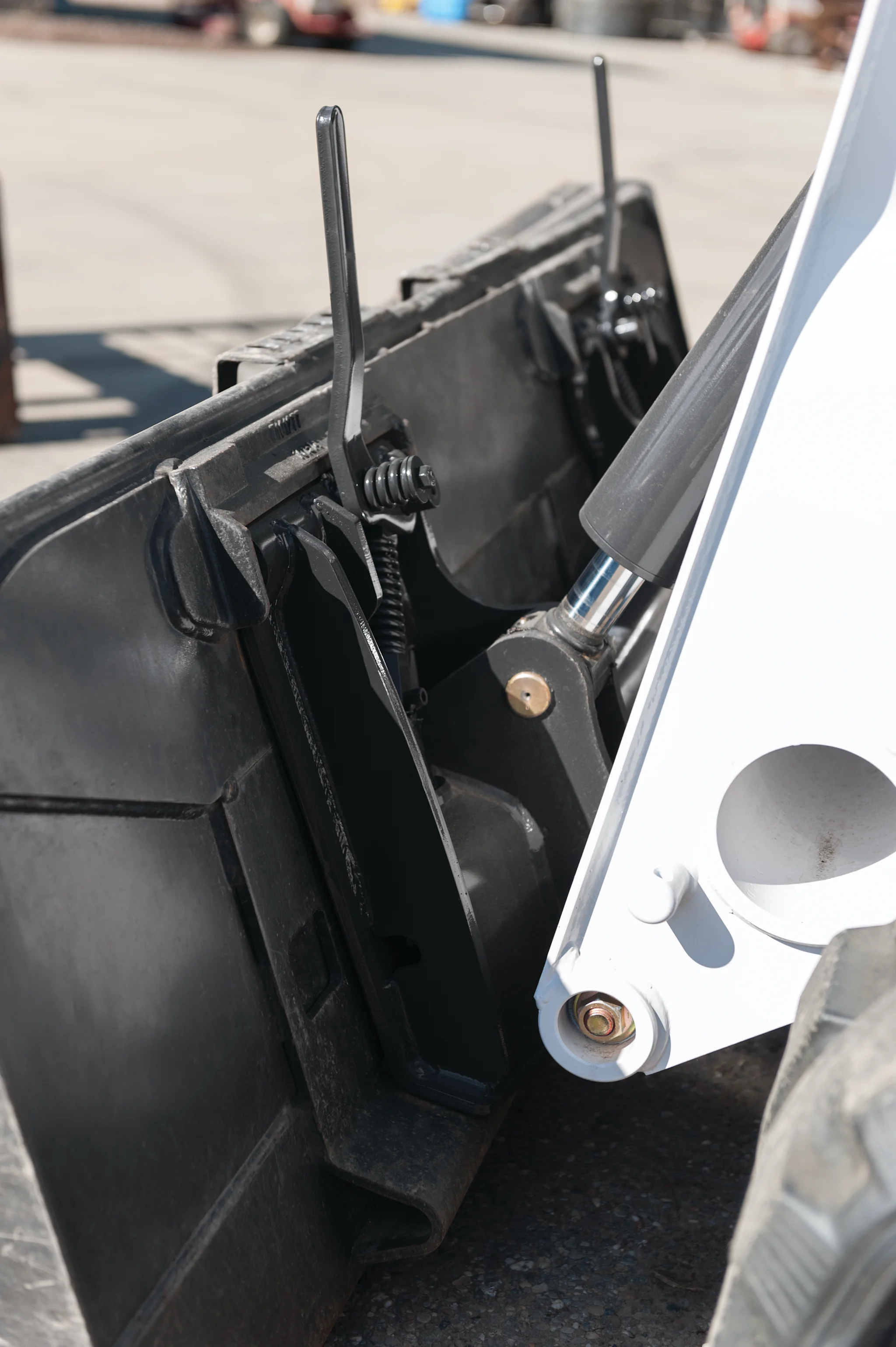 Attachment Versatility
Grouped by machine system, per the brochure table.
ROPS meets the requirements of SAE-J1040 and ISO 3471; FOPS meets SAE-J1043 and ISO 3449, Level I.
A tire is as much a choice of tool as an attachment — the wrong set costs you both fuel and time.
The most affordable tire in the Bobcat lineup — for low to medium intensity work on soft to intermediate surfaces.
Not intended for hard or abrasive surfaces: on asphalt and concrete tire life drops sharply.
The everyday all-rounder: it handles both the site and hard surfaces. Standard on R-Series machines.
The same tires, but the rim moves the wheel outboard — a wider stance. Extra stability where the work involves heavy attachments and slopes.
A reinforced tire for conditions that cut and tear an ordinary one: demolition, scrap, broken concrete, rebar.
There is no air inside at all, so there are no punctures — sites with nails, glass and rebar stop being a problem.
Heavier and stiffer than pneumatic tires: you feel it on longer moves.
A wide contact patch and low ground pressure — lawns, sand, peat, freshly graded ground.
Which of these is available on this particular machine is in the equipment table above.
The tire is inflated to the recommended pressure and mounted on a test rig: it rotates under a load representing machine weight while a surface made of steel saw blades moves side to side beneath it, reproducing turning motions on the most abrasive surface imaginable. The test runs until the tread is fully worn, measuring how much rubber is lost along the way. The laboratory replaces the field so that every sample meets identical conditions: terrain, weather and operator habits cannot distort the comparison.
This checks what wear testing cannot show: whether the tire carries its load on slopes as well as flat ground without deforming; whether it can foul any part of the machine in operation; whether it seats firmly on the recommended rim and stays put under high torque. This stage is what separates a Bobcat-approved tire from a generic off-the-shelf one of the same size.
How three generations of the Standard Duty tire compare in the same test, in revolutions to fully worn tread:
| First generation | 494 | |
|---|---|---|
| Second generation | 555 | +12 % vs. the first |
| Current generation | 618 | +11 % vs. the second, +25 % vs. the first |
| First generation | Second generation | Current generation | |
|---|---|---|---|
| Ply rating | 8 PR | 10 PR | 10 PR |
| Load capacity, kg | 1 875 | 2 120 | 2 135 |
| Pattern depth, mm | 17 | 17,5 | 19,5 |
| Overall width, mm | 277 | 260 | 260 |
| Overall diameter, mm | 766 | 768 | 773 |
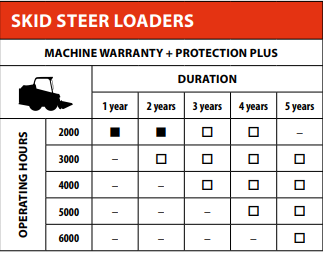
Genuine Bobcat tires are backed by a 12-month prorated warranty.
Tire life on site varies with surface, duty cycle and operator habits. The figures quoted come from controlled laboratory tests run to Bobcat's standard internal method at the recommended tire pressure.
Source: Bobcat Standard Duty Tires
Broken down by stage of work — what the job consists of and what does each stage. What is available on this particular machine is in «Compatible attachments» below.
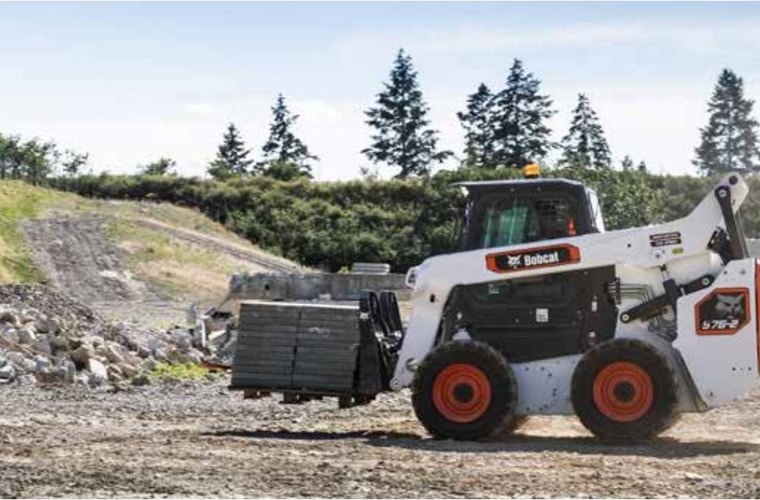
The five stages every site goes through — from ground nobody has touched in decades to a lawn that will be maintained for years. A wheeled machine wins on mobility: it moves quickly between points on site and spares the hard surfaces of the access roads, while tire choice covers soft ground.
Stumps, brush, self-seeded growth, construction debris. Remove everything unwanted without damaging what stays.
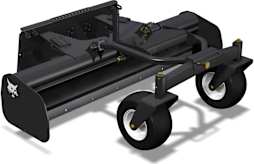
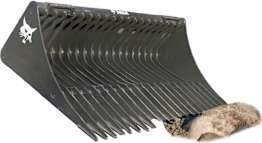
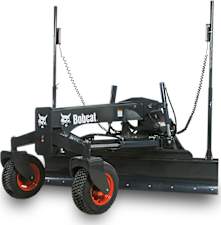
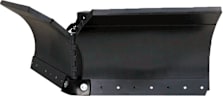
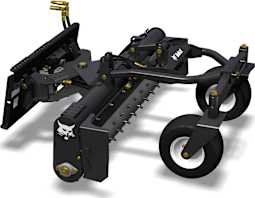
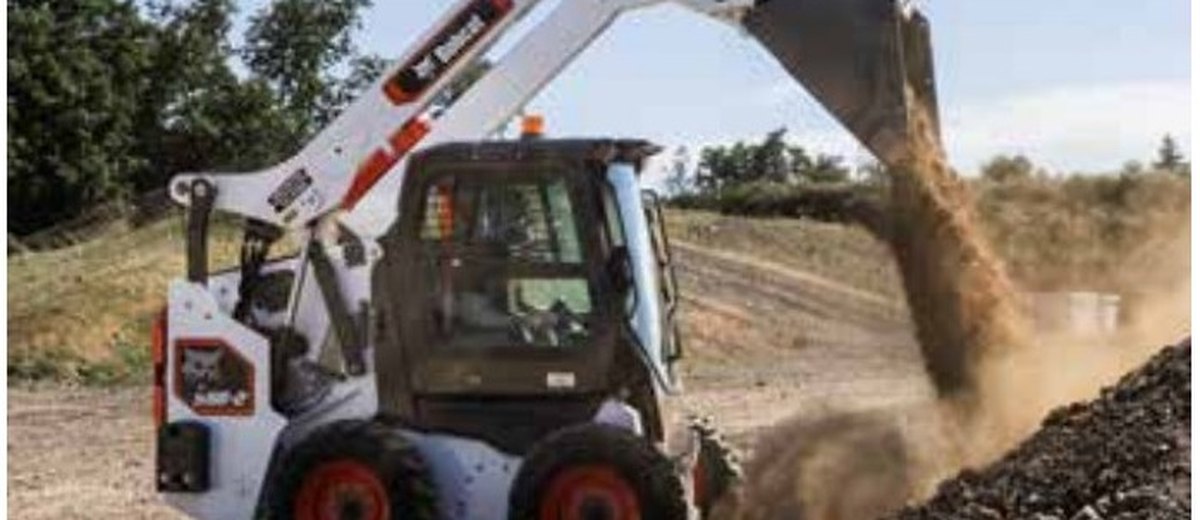
Pull out the big stones, break up the soil, bring it to level. The landscape rake picks up rocks from 19 mm while smoothing the surface; the grader blade is six-way with a reversible cutting edge and optional laser control. A mistake here shows up a season later as settlement.
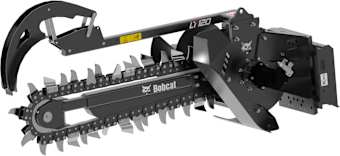
Services, drainage, holes for posts and trees. The knuckle-joint auger holds vertical on any terrain and digs 30 cm deeper than standard units. The trencher puts pipe below the frost line in a single pass.
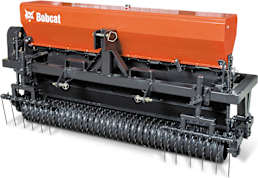
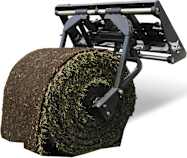
The seeder places seed at the right spacing and depth — germination is more even than broadcasting, and seed does not spread where it is not wanted. The soil conditioner follows the ground contour and prepares the bed for seeding or sodding.
The job does not end at handover: usually the same client asks you to maintain what you built — all year round. Swap the attachment and the machine turns from a build machine into a service machine.
Source: B4502790-EN (03-2024)
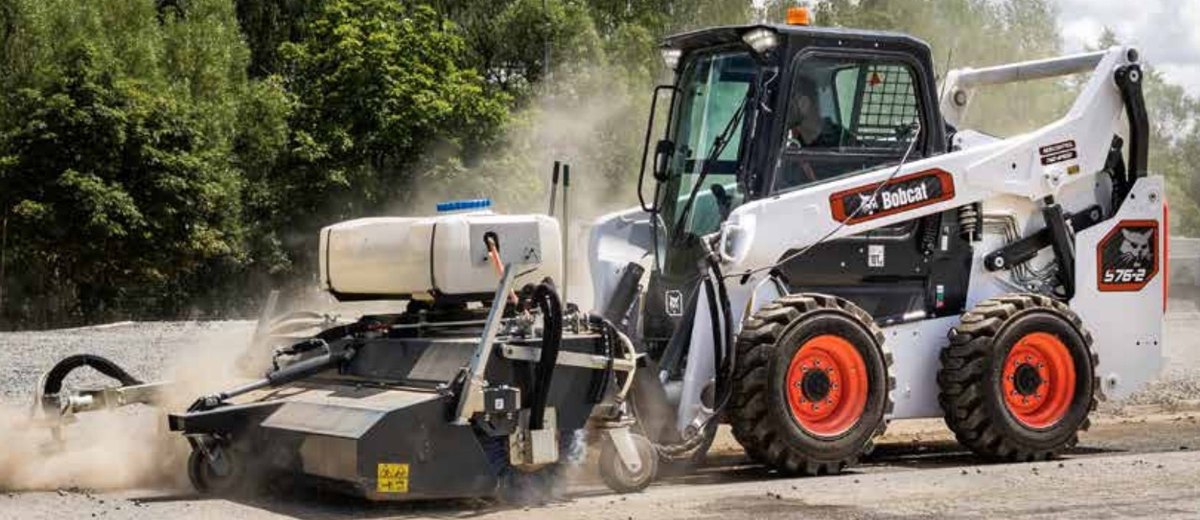
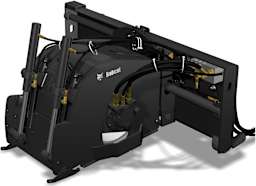
The full pavement repair cycle on one machine: strip the old surface, bring the base to level, clean, lay the new material, compact. A wheeled machine is in its element here — hard surfaces do not wear it, moves along the site are quick, and tire type is chosen for how abrasive the base is.
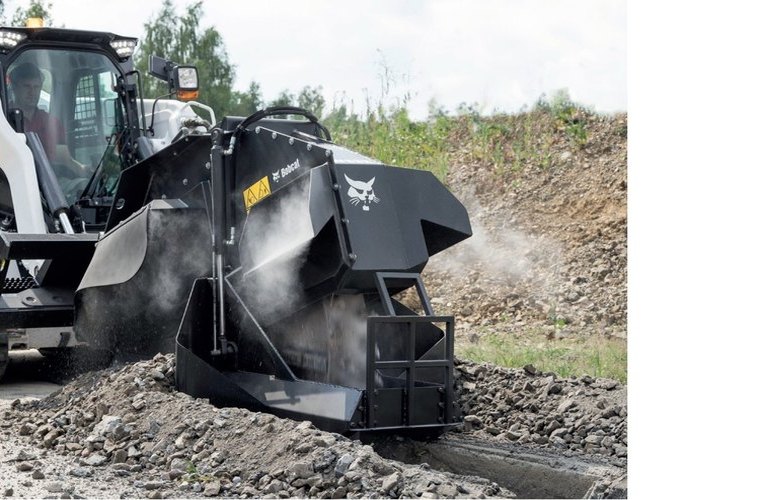
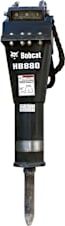
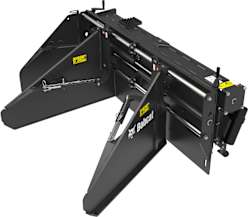
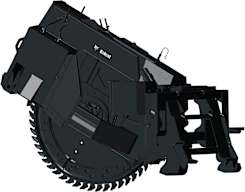
Removing pavement and cutting trenches through asphalt, concrete, frozen ground and wire mesh. The planer's hydraulic side-shift works tight to kerbs and walls, each ski has independent hydraulic depth control, and teeth can be replaced individually to match the material. The wheel saw cuts from 15 to 80 cm deep.
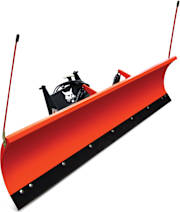
The base under the new surface. The grader blade is six-way with a reversible cutting edge and manual side-shift of up to 30 cm each way, optionally with laser control. The HD box blade cuts in both directions and tilts up to 20 cm — handy on car parks and pavements.
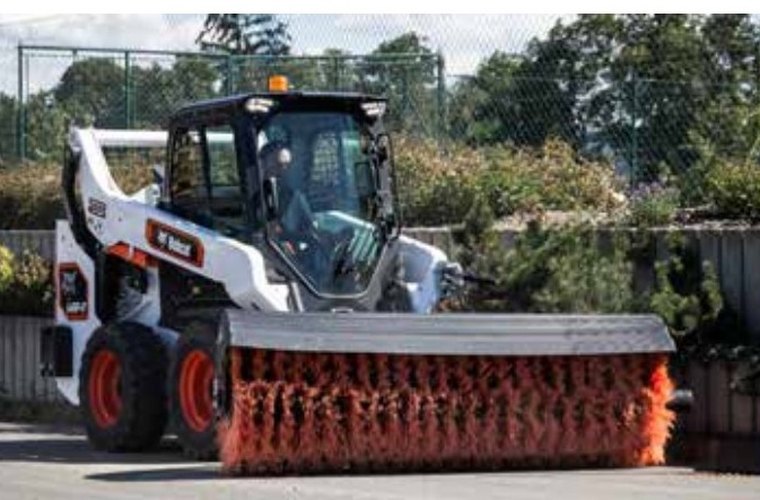
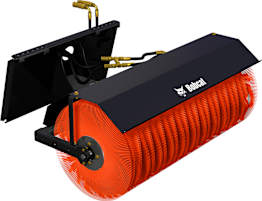
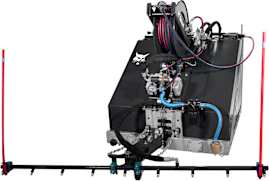
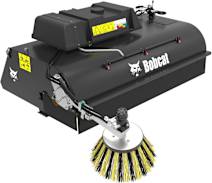
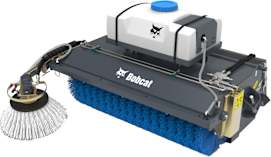
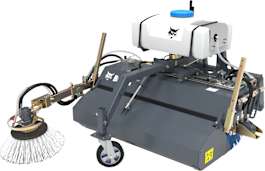
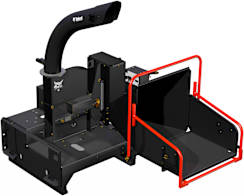
Before the bituminous layer the surface has to be clean and dust-free. Sweepers clean forward and in reverse; the HD open-frame sweeper carries its brush ahead of the bucket, which suits milled asphalt. The multipurpose sweeper's hopper opens hydraulically from the cab. The pressure washer runs from the cab or off a 20-metre hose reel.
Pavements, road widening, trench backfill, sub-base layers. Spread thickness is adjustable and there is hydraulic side-shift.
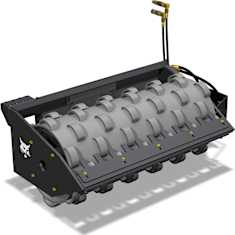
Compacting a trench bottom with an attachment removes the need to put a worker down there. For the road surface, use the vibratory roller attachment or dedicated light compaction equipment from the Bobcat range.
Source: B4503491-EN (11-2025)
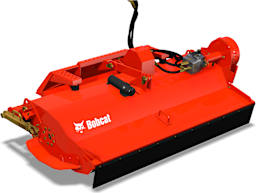
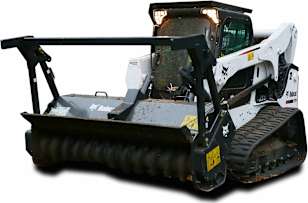
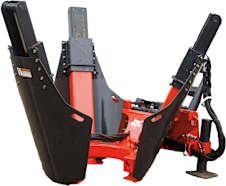
The cutter turns a tree into mulch in one pass — no separate felling, skidding or haulage. The compact machine slaloms between trunks and takes out exactly what needs to go.
The cutter cuts, grinds and mulches a tree within minutes, leaving a clean site. Spiral tooth pattern, double-tipped carbide teeth, below-grade operation.
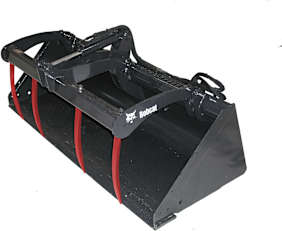
Grabbing, loading and chipping slash. The root grapple is built for branches, brush and heavy material — a heavy-duty design that improves wear life.
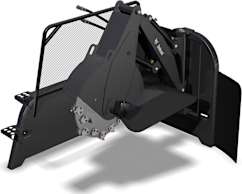
The stump grinder sits at 90°, so the stump stays in view from the seat, and it grinds away the concealed part up to 30 cm underground as well.
Source: B4489942-EN (04-2018)
The compact machine reaches the target tree between the trunks, and travels on an ordinary trailer.
Only the selected tree is cut — surrounding vegetation is left undamaged.
The mandatory protection kit gives the operator and the machine top-level protection in these conditions.
No extra equipment required: from standing tree to mulch.
| Cutting width, mm | Teeth | Counter-cutter rows | Tree diameter, continuous (mm) | Tree diameter, intermittent (mm) | Tree diameter, occasional (mm) | Weight, kg | |
|---|---|---|---|---|---|---|---|
| FRC150ST | 1 500 | 30 | 3 rows | 100–120 | 150–200 | 220–260 | 850 |
| FRC150HT | 1 500 | 30 | 5 rows | 100–120 | 180–220 | 250–300 | 1 050 |
| FRC200HT | 2 000 | 36 | 5 rows | 100–120 | 180–220 | 250–300 | 1 270 |
All three run on High Flow only and require a control kit — on a machine without High Flow the cutter will not work. Trunk diameters: “continuous” is sustained operation, “intermittent” is individual trunks, “occasional” is the limit diameter. HT models use the variable-torque M-Boost motor: 40% more power and fast recovery from overload. We confirm the exact model for your machine at order.
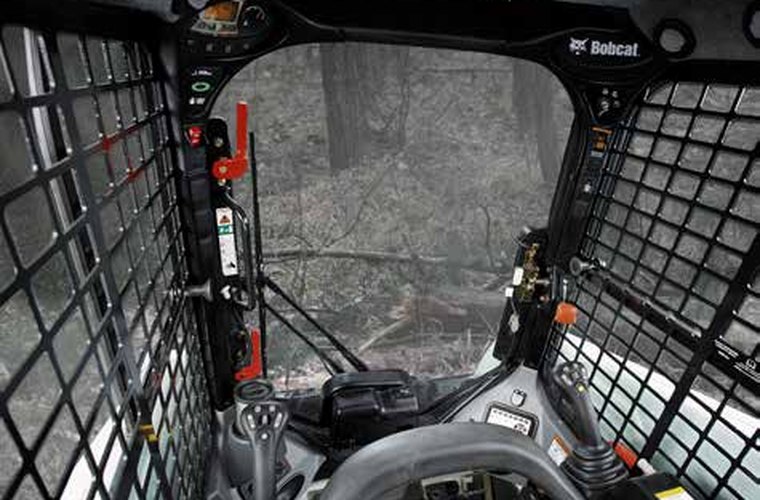
Contents per the Forestry Solutions brochure B4489942-EN (04-2018); the kit for your specific machine is confirmed at order.
 Machine