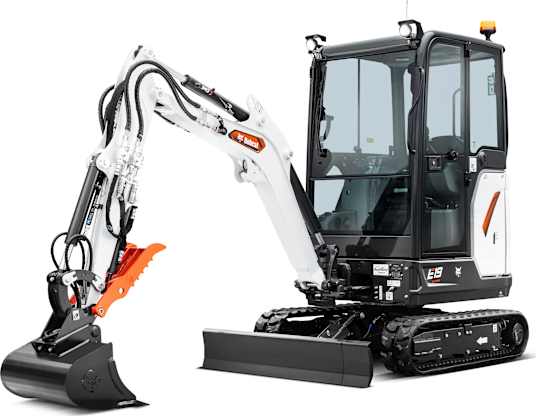
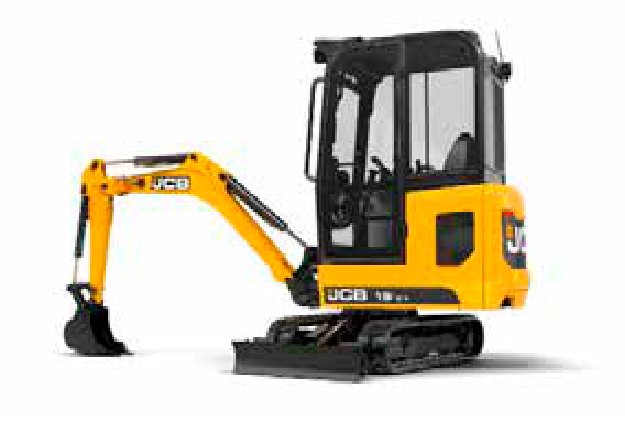
Mini excavators 1–2 t
Data: manufacturers and Bobcat's comparison tests. Does your experience say otherwise? Tell us ↓
| Parameter | Bobcat E19 R2 | JCB 19C-1 |
|---|---|---|
| Capacity and weight | ||
| Operating weight, standard / heavy counterweight kg | 1,905 / 2,010 | 1,910 |
| Working range | ||
| Digging depth, short / long arm mm | 2,364 / 2,544 | 2,271 / 2,412 |
| Dump height, short / long arm mm | 2,588 / 2,716 | 2,598 / 2,637 |
| Reach at ground level, short / long arm mm | 4,062 / 4,237 | 3,834 / 3,981 |
| Forces | ||
| Bucket breakout force kN | 18.33 | 18 |
| Arm breakout force, short / long arm kN | 12.63 / 11.51 | 10.1 / 9.1 |
| Dimensions | ||
| Max. tail overhang mm | 339 | 438 |
| Undercarriage width, min.–max. mm | 980–1,360 | 980–1,330 |
| Track length on ground mm | 1,258 | 1,220 |
| Overall track length mm | 1,651 | 1,578 |
| Track width mm | 230 | 230 |
| Overall height mm | 2,329 | 2,328 |
| Engine | ||
| Engine | Yanmar 3TNV70 | JCB 403D-07 |
| Engine power kW | 10.3 (2,200 rpm) | 10.8 (2,550 rpm) |
| Hydraulics | ||
| Hydraulic pump | variable displacement, load sensing | variable displacement, load sensing |
| Pump capacity l/min | 44 | 36 |
| Auxiliary flow AUX1 / AUX2 l/min | 30 / 12 | 32 / — |
| Travel and slew | ||
| Slew speed rpm | 9.7 | 7.9 |
| Travel speed low / high km/h | 2.0 / 4.0 | 2.4 / 4.1 |
| Boom swing left / right ° | 80 / 60 | 75 / 55 |
The table combines manufacturers' data and measurements from Bobcat's comparison tests (06-2025).
JCB sells the machine as the 19C-1 and the 19C-1 PC; the PC adds auto-shift, proportional auxiliary control and an optional extra-long arm (1,344 mm, arm breakout force 7.9 kN).
— means the manufacturer does not publish this figure.
The machine travels along the ditch while the mower runs and the arm follows the bank — travel, auxiliary flow and arm movement at the same time. In Bobcat's test the E19 R2 ran all three together; on the 19C-1 hydraulic movements could not be combined, although it also has load-sensing hydraulics.
To slew without touching a wall or fence, the tracks must stand at least the tail overhang away from it: 34 cm for the E19 R2, 44 cm for the 19C-1.
Calculation: tail overhang 339 / 438 mm
Each cycle slews about 90° to the truck and back. At full slew speed the E19 R2 spends about 10 minutes a day slewing, the 19C-1 about 13 minutes.
Calculation: 90° = 0.25 turn; 0.25 ÷ 9.7 rpm × 60 = 1.55 s × 400 slews = 10.3 min · 0.25 ÷ 7.9 rpm × 60 = 1.90 s × 400 = 12.7 min
Measurements and notes come from Bobcat's comparison tests (06-2025), in which both machines did the same jobs. These figures are not in the manufacturers' brochures. “Operator's opinion” is the personal impression of the operator who worked in the test: it is subjective, and your experience may differ.
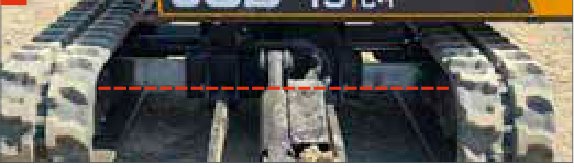
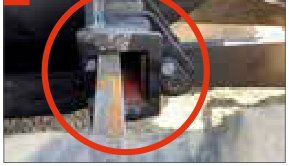
What it affects: The extendable undercarriage carries the machine's side stability; its frame takes the load every time the tracks are widened.
Operator's opinionsubjectiveThe ride felt rougher.
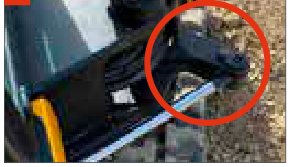
What it affects: Interlocking tracks keep the track guided on the rollers; an in-track swing frame lets the machine work closer to a wall.
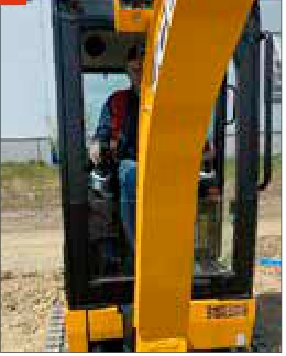
Operator's opinionsubjectiveThe view forward past the boom stayed open.
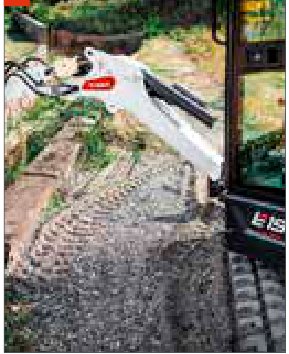
Operator's opinionsubjectiveMovements were smooth and precise.
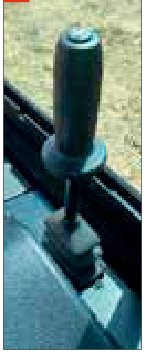
Operator's opinionsubjectiveThe workgroup reacted abruptly, and the digging force at the bucket felt noticeably lower than on the E19 R2, although the published figures are similar.
What it affects: Combined movements matter for attachments that need travel and auxiliary flow together, such as a flail mower.
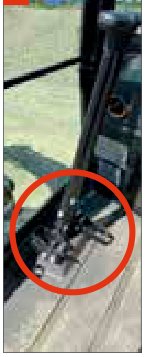
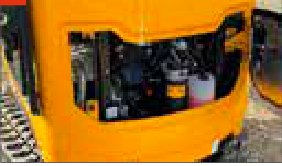
Photos: Bobcat comparison tests. JCB 19C-1 overview photo: JCB.


Data checked 25.09.2026. Manufacturers may change their data; figures for a specific machine depend on its configuration.




Ehitajate tee 107A
13514 Tallinn Eesti
 +372 6 511 330
+372 50 27 368
+372 6 511 330
+372 50 27 368
 bobcat@bobcat.ee