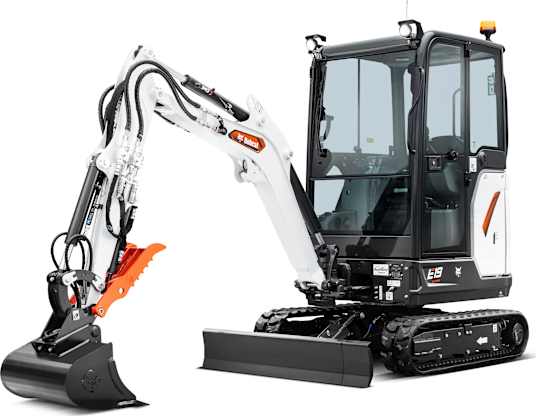
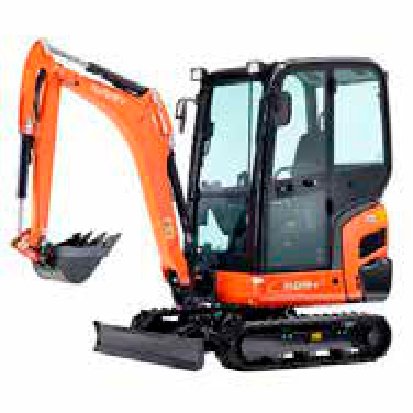
Mini excavators 1–2 t
Data: manufacturers and Bobcat's comparison tests. Does your experience say otherwise? Tell us ↓
| Parameter | Bobcat E19 R2 | Kubota KX019-4 |
|---|---|---|
| Capacity and weight | ||
| Operating weight, standard / heavy counterweight kg | 1,905 / 2,010 | 1,855 |
| Working range | ||
| Digging depth, short / long arm mm | 2,364 / 2,544 | 2,580 (long arm) |
| Dump height, short / long arm mm | 2,588 / 2,716 | 2,560 (long arm) |
| Reach at ground level, short / long arm mm | 4,062 / 4,237 | 4,070 (long arm) |
| Forces | ||
| Bucket breakout force kN | 18.33 | 15.9 |
| Arm breakout force, short / long arm kN | 12.63 / 11.51 | 7.8 (long arm) |
| Dimensions | ||
| Max. tail overhang mm | 339 | 450 |
| Undercarriage width, min.–max. mm | 980–1,360 | 990–1,300 |
| Track length on ground mm | 1,258 | 1,230 |
| Overall track length mm | 1,651 | 1,590 |
| Track width mm | 230 | 230 |
| Overall height mm | 2,329 | 2,350 |
| Engine | ||
| Engine | Yanmar 3TNV70 | Kubota D902 |
| Engine power kW | 10.3 (2,200 rpm) | 11.8 (2,300 rpm) |
| Hydraulics | ||
| Hydraulic pump | variable displacement, load sensing | variable displacement, no load sensing |
| Pump capacity l/min | 44 | 44 |
| Auxiliary flow AUX1 / AUX2 l/min | 30 / 12 | 27.7 / — |
| Travel and slew | ||
| Slew speed rpm | 9.7 | 9.1 |
| Travel speed low / high km/h | 2.0 / 4.0 | 2.2 / 4.2 |
| Boom swing left / right ° | 80 / 60 | 75 / 60 |
The table combines manufacturers' data and measurements from Bobcat's comparison tests (06-2025).
The KX019-4 comes with a long arm (1,190 mm) as standard; its figures compare with the E19 R2 long-arm values. Kubota also sells the KX019-4 SF with a shorter arm (950 mm) and boom.
— means the manufacturer does not publish this figure.
The machine travels along the ditch while the mower runs and the arm follows the bank — travel, auxiliary flow and arm movement at the same time. In Bobcat's test the E19 R2 ran all three together; on the KX019-4 straight travel allowed one additional function at a time.
To slew without touching a wall or fence, the tracks must stand at least the tail overhang away from it: 34 cm for the E19 R2, 45 cm for the KX019-4.
Calculation: tail overhang 339 / 450 mm
On the E19 R2 the operator turns a dial in the cab. On the KX019-4 the heater valve is in the engine compartment: the operator stops, leaves the cab, opens the rear hood and turns the valve.
Arm breakout force is 11.51 kN on the E19 R2 and 7.8 kN on the KX019-4: 48% more force at the bucket teeth when the arm curls in.
Calculation: 11.51 ÷ 7.8 = 1.48
Measurements and notes come from Bobcat's comparison tests (06-2025), in which both machines did the same jobs. These figures are not in the manufacturers' brochures. “Operator's opinion” is the personal impression of the operator who worked in the test: it is subjective, and your experience may differ.
What it affects: Arm length and counterweight let you choose between more reach and more lifting stability for the job.
What it affects: The blade length decides whether material can be pushed and levelled in a straight line. Roller flanges and interlocking tracks both keep the track on the rollers.
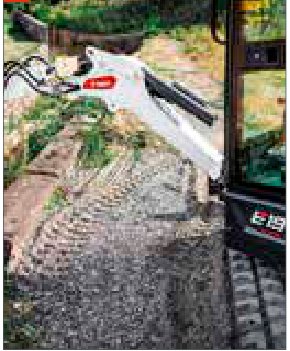
What it affects: This matters for attachments that need travel and auxiliary flow at the same time, such as a flail mower.
Operator's opinionsubjectivePositioning with the pedal was less precise.
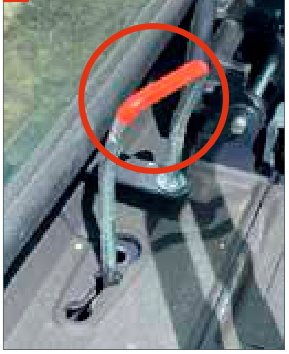
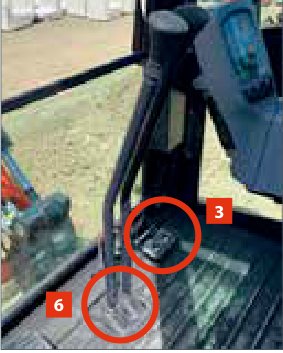
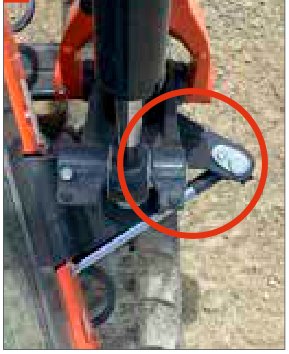
What it affects: An in-track swing frame lets the machine work closer to a wall.
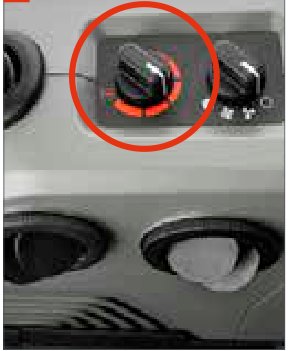
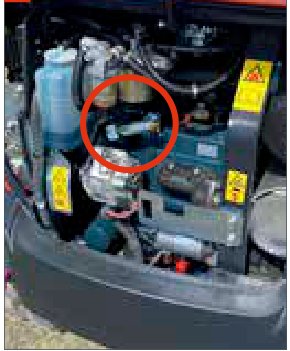
Photos: Bobcat comparison tests. Kubota KX019-4 overview photo: Kubota.


Data checked 25.09.2026. Manufacturers may change their data; figures for a specific machine depend on its configuration.




Ehitajate tee 107A
13514 Tallinn Eesti
 +372 6 511 330
+372 50 27 368
+372 6 511 330
+372 50 27 368
 bobcat@bobcat.ee