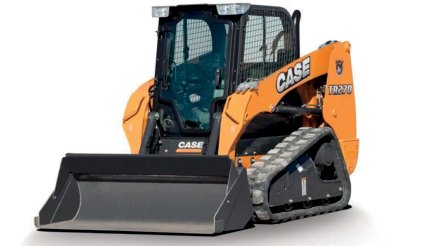
Compact track loaders
Data: manufacturers and Bobcat's comparison tests. Does your experience say otherwise? Tell us ↓
| Parameter | Bobcat T590 | CASE TR270B |
|---|---|---|
| Capacity and weight | ||
| Operating weight kg | 3,664 | 3,750 |
| Tipping load kg | 2,773 | 2,450 |
| Rated operating capacity (ISO 14397-1, 35%) kg | 971 | 860 (915 with counterweights) |
| Lift path | vertical | radial |
| Engine | ||
| Engine | Bobcat 2.4 L, Stage V | FPT F5H, 3.4 L, Stage V |
| Power kW | 50.8 | 55 |
| Hydraulics | ||
| Auxiliary flow, standard l/min | 64.7 | 92 |
| Auxiliary flow, High Flow (option) l/min | 101.1 | 123 |
| System pressure MPa | 23.8–24.5 | 21.0 |
| Dimensions | ||
| Height with cab mm | 1,972 | 1,998 |
| Overall width mm | 1,702 | 1,676 |
| Length without attachment mm | 2,657 | 2,662 |
| Ground clearance mm | 188 | 207 |
| Working range | ||
| Height to bucket hinge pin mm | 3,023 | 3,178 |
| Dump height mm | 2,319 | 2,556 |
| Dump reach at max. height mm | 887 | 566 |
| Dump angle ° | 42 | 38 |
| Forces | ||
| Lift arm breakout force kN | 21.4 | 27.8 |
| Bucket breakout force kN | 22.3 | 32.3 |
| Travel and slew | ||
| Travel speed km/h | 10.4 / 16 (option) | 8.9 / 12.9 (option) |
| Fuel tank l | 138.2 | 73.8 |
Table: manufacturers' published data. T590 breakout forces converted from kg to kN (× 9.81); CASE states its breakout forces as estimates.
— means the manufacturer does not publish this figure.
At the loading rates measured in Bobcat's test the T590 finishes in about 6.5 hours on about 89 litres of fuel; the TR270B needs about 8.3 hours and 101 litres.
Calculation: 500 ÷ 77.4 m³/h = 6.5 h; 500 ÷ 5.6 m³/l = 89 l · 500 ÷ 60.6 m³/h = 8.3 h; 500 ÷ 4.97 m³/l = 101 l
950 kg is within the T590's rated operating capacity of 971 kg. The TR270B is rated for 860 kg, or 915 kg with its optional counterweights.
Calculation: 950 < 971 kg (T590); 950 > 915 kg (TR270B with counterweights) > 860 kg
At the fuel use measured in the loading test, the T590's 138.2 l tank lasts about 10 hours. The TR270B's 73.8 l tank lasts about 6 hours.
Calculation: 77.4 ÷ 5.6 = 13.8 l/h → 138.2 ÷ 13.8 = 10.0 h · 60.6 ÷ 4.97 = 12.2 l/h → 73.8 ÷ 12.2 = 6.0 h
At full dump height the T590's bucket edge reaches 887 mm in front of the machine, the TR270B's 566 mm. The load lands 32 cm further from the side wall of the body.
Calculation: 887 − 566 = 321 mm
Measurements and notes come from Bobcat's comparison tests (06-2026), in which both machines did the same jobs. These figures are not in the manufacturers' brochures. “Operator's opinion” is the personal impression of the operator who worked in the test: it is subjective, and your experience may differ.
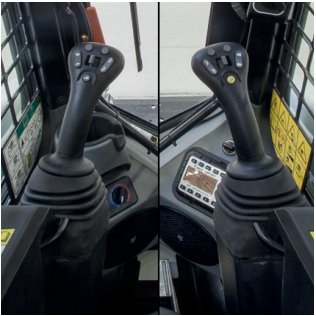
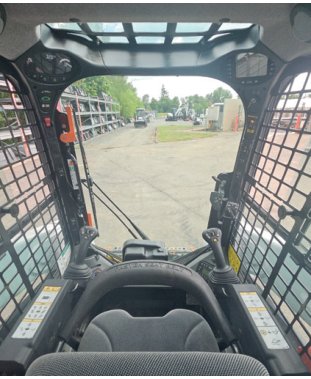
Operator's opinionsubjectiveThe settings were hard to balance against each other, the joysticks needed more force, and holding a straight line took more attention.
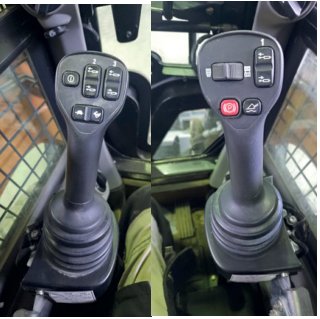
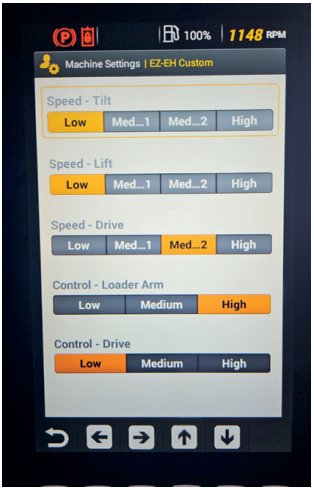
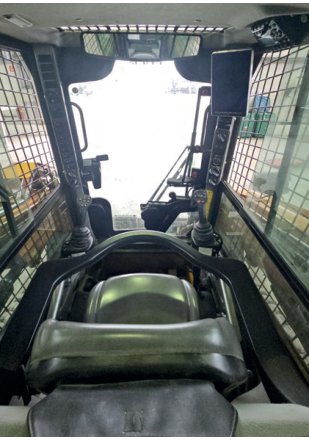
Operator's opinionsubjectiveThe seat surface was slippery; on hard ground the cab vibrated and was loud.
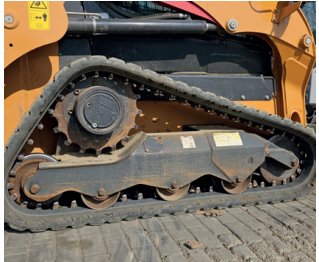
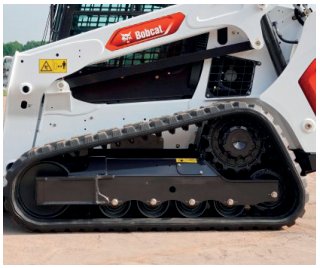
What it affects: The number of rollers carrying the track affects ride comfort and the risk of the track coming off on uneven ground.
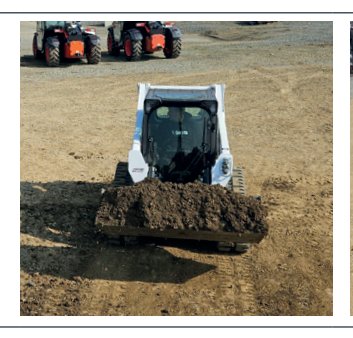
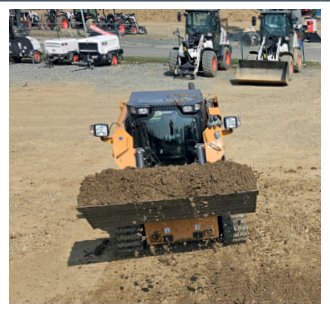
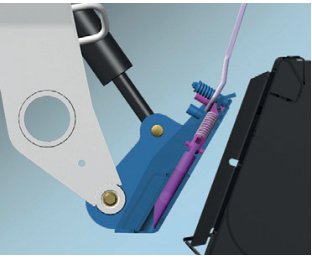
What it affects: Cushioning at the end of the stroke takes the jolt out of the stop, which keeps more material in the bucket.
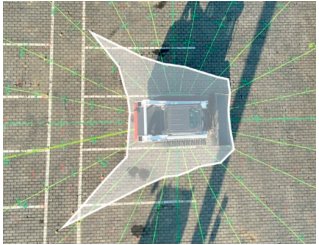
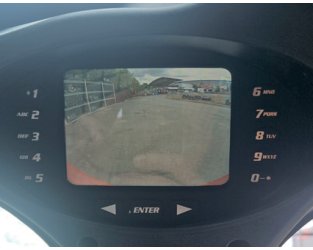
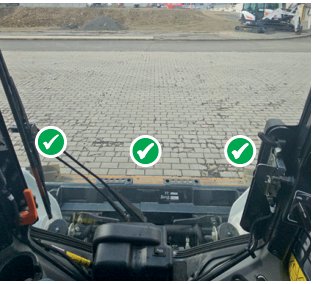
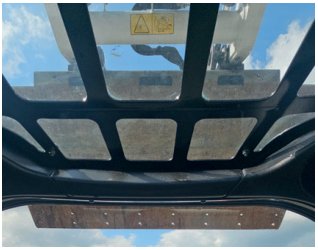
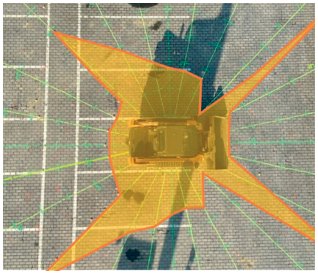
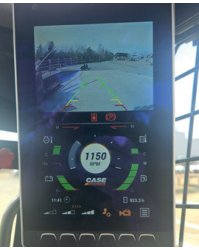
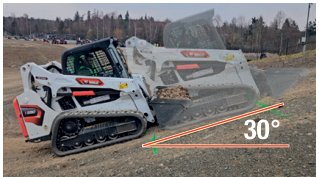
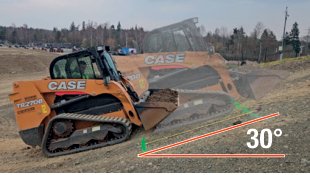
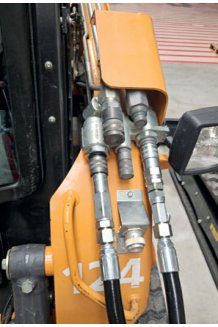
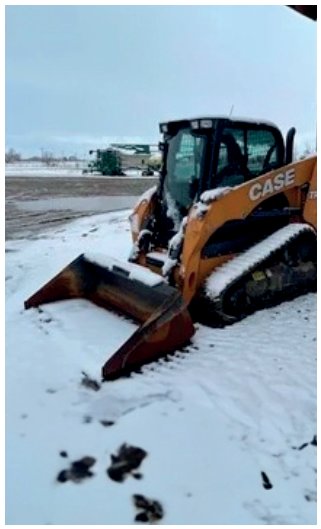
| Bobcat T590 | CASE TR270B | |
|---|---|---|
| Loading cycles per hour | 158 | 130 |
| Material loaded per hour | ~77.4 m³ | ~60.6 m³ |
| Material per litre of fuel | 5.6 m³ | 4.97 m³ |
| Average speed in the driving test | 11 km/h | 9.6 km/h |
| Roll-back on a 30% slope | 0.88 m/min | 3.07 m/min |
The T590 used more fuel per hour and loaded more material per hour and per litre.
What it affects: Fuel per hour tells you what the machine burns; fuel per cubic metre loaded tells you what the work costs. That figure and cycles per hour set the fuel and machine hours per job — your operating cost.
Bobcat comparison test: both machines did the same job with the same material. Results are indicative — they depend on the operator, the material and the site.
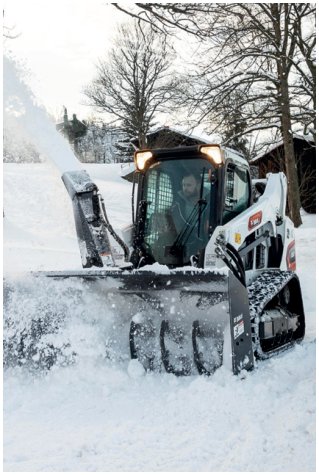
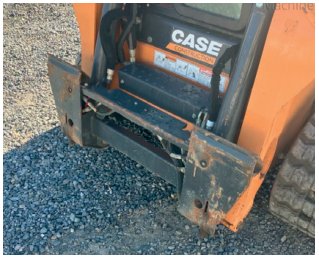
Photos: Bobcat comparison tests. CASE TR270B overview photo: CASE.
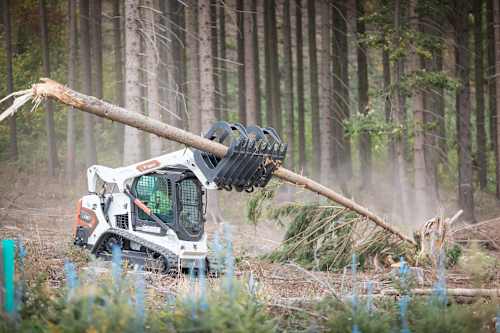
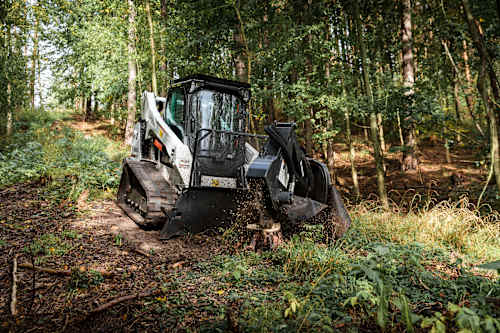
Data checked 25.09.2026. Manufacturers may change their data; figures for a specific machine depend on its configuration.




Ehitajate tee 107A
13514 Tallinn Eesti
 +372 6 511 330
+372 50 27 368
+372 6 511 330
+372 50 27 368
 bobcat@bobcat.ee