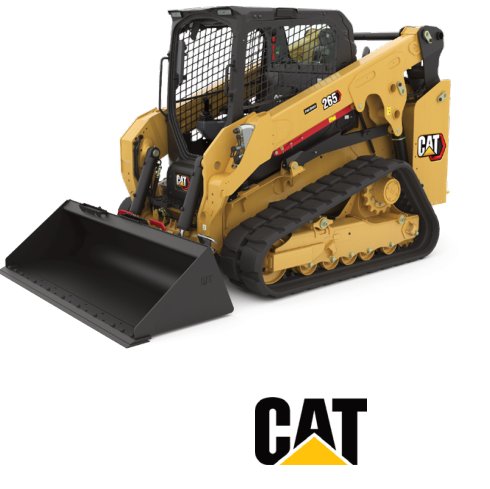
Compact track loaders
Data: manufacturers and Bobcat's comparison tests. Does your experience say otherwise? Tell us ↓
| Parameter | Bobcat T76 | CAT 265 |
|---|---|---|
| Capacity and weight | ||
| Operating weight kg | 4,986 | 5,196 |
| Pushing force daN | 4,100 | 3,800 |
| Tipping load kg | 4,050 | 3,901 |
| Rated operating capacity (35%) kg | 1,418 | 1,365 |
| Lift path | vertical | vertical |
| Forces | ||
| Lift breakout force daN | 3,124 | 2,758 |
| Tilt breakout force daN | 3,137 | 3,513 |
| Engine | ||
| Engine | Bobcat 2.4 L | CAT C2.8TA |
| Engine power kW | 55.2 | 55.3 |
| Hydraulics | ||
| Standard flow l/min / bar | 93.1 / 240 | 84.5 / 237 |
| High Flow (T76) / Super Flow (CAT), option l/min / bar | 119.6 / 257 | 133 / 252 |
| High Flow / Super Flow hydraulic power kW | 51.2 | 55.8 |
| Dimensions | ||
| Width over tracks (with bucket) m | 1.99 (2.06) | 1.98 (2.04) |
| Length (with bucket) m | 2.88 (3.77) | 2.97 (3.72) |
| Wheelbase / track width | 1.53 m / 450 mm | 1.62 m / 450 mm |
| Machine height m | 2.07 | 2.08 |
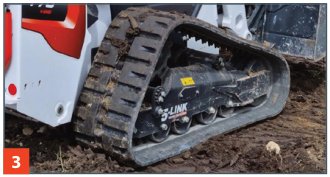
| Ground clearance cm | 23.5 | 23.5 |
| Ground pressure g/cm² | 368 | 355 |
| Working range | ||
| Bucket dump height mm | 2,520 | 2,545 |
| Reach at max. dump height mm | 1,055 | 735 |
The table combines manufacturers' data and measurements from Bobcat's comparison tests (11-2025).
Values measured by the Bobcat Institute unless stated otherwise. The CAT 265 on test had Super Flow; High Flow brochure data are similar for both machines. Measured CAT breakout forces were 300 daN (lift) and 420 daN (tilt) below the brochure figures.
— means the manufacturer does not publish this figure.
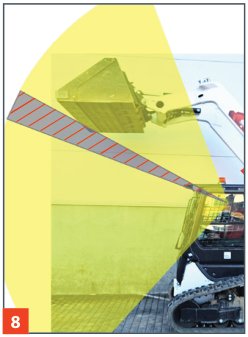
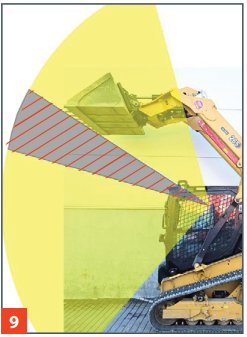
At full dump height the T76 bucket edge reaches 1,055 mm in front of the machine, the CAT 265's 735 mm: the load lands 32 cm further towards the middle of the body.
Calculation: 1,055 − 735 = 320 mm
At the average speeds measured in the driving test, 1 km takes about 5.5 minutes with the T76 and 7.8 minutes with the CAT 265.
Calculation: 60 ÷ 11 km/h = 5.5 min; 60 ÷ 7.7 km/h = 7.8 min
The Bob-Tach coupler has manual handles and can be locked by hand. The CAT 265 coupler has no handles.
In the test the T76 heated its cab from −1 °C to 20 °C in 9 minutes; the CAT 265 needed more than 20 minutes.
Measurements and notes come from Bobcat's comparison tests (11-2025), in which both machines did the same jobs. These figures are not in the manufacturers' brochures. “Operator's opinion” is the personal impression of the operator who worked in the test: it is subjective, and your experience may differ.
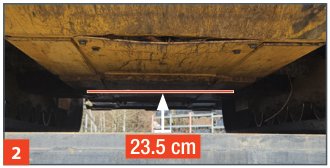
What it affects: A longer track contact lowers ground pressure; how the machine is balanced decides whether that turns into more pushing and lifting.
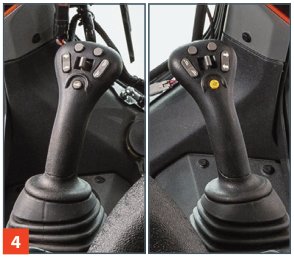
Operator's opinionsubjectiveThe difference between tilt and lift force needed constant correction.
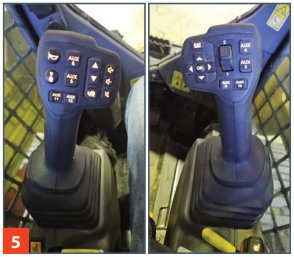
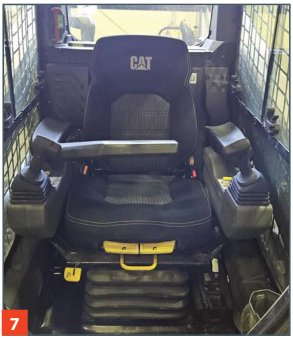
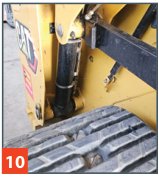
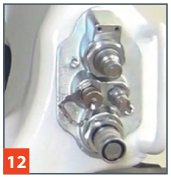
Operator's opinionsubjectiveThe auxiliary block was harder to connect.
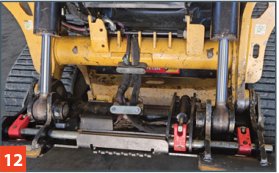
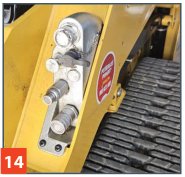
| Bobcat T76 | CAT 265 | |
|---|---|---|
| Material moved per litre of fuel, loading test | about 2× | 1× |
| Fuel used per hour, loading test | 23% less | reference |
| Average speed in the driving test | 11 km/h | 7.7 km/h |
| Cab warm-up from −1 °C to 20 °C | 9 min | over 20 min |
Measured by Bobcat on the same loading job and driving course.
What it affects: Fuel per hour tells you what the machine burns; fuel per cubic metre loaded tells you what the work costs. That figure and cycles per hour set the fuel and machine hours per job — your operating cost.
Bobcat comparison test: both machines did the same job with the same material. Results are indicative — they depend on the operator, the material and the site.
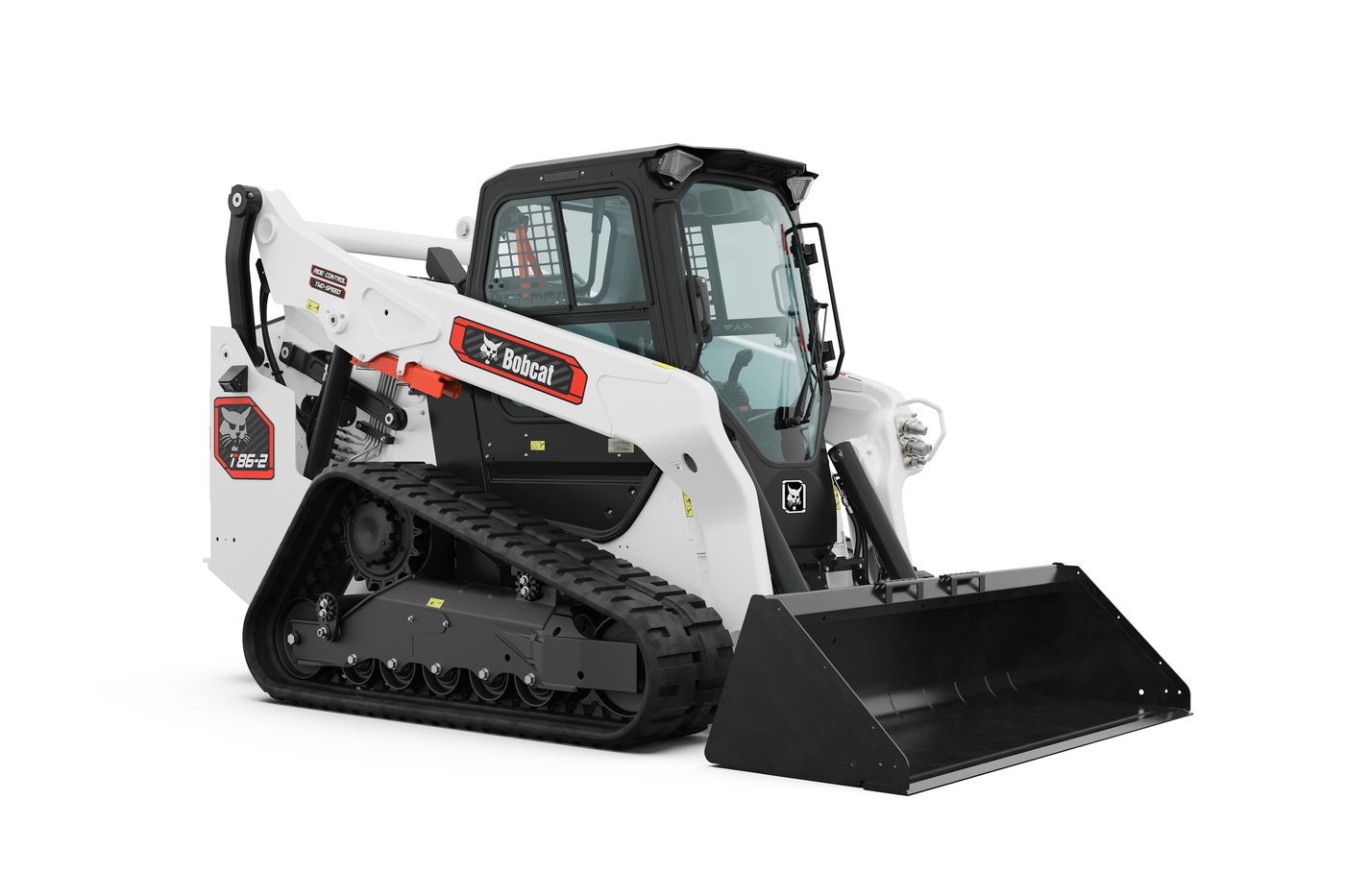
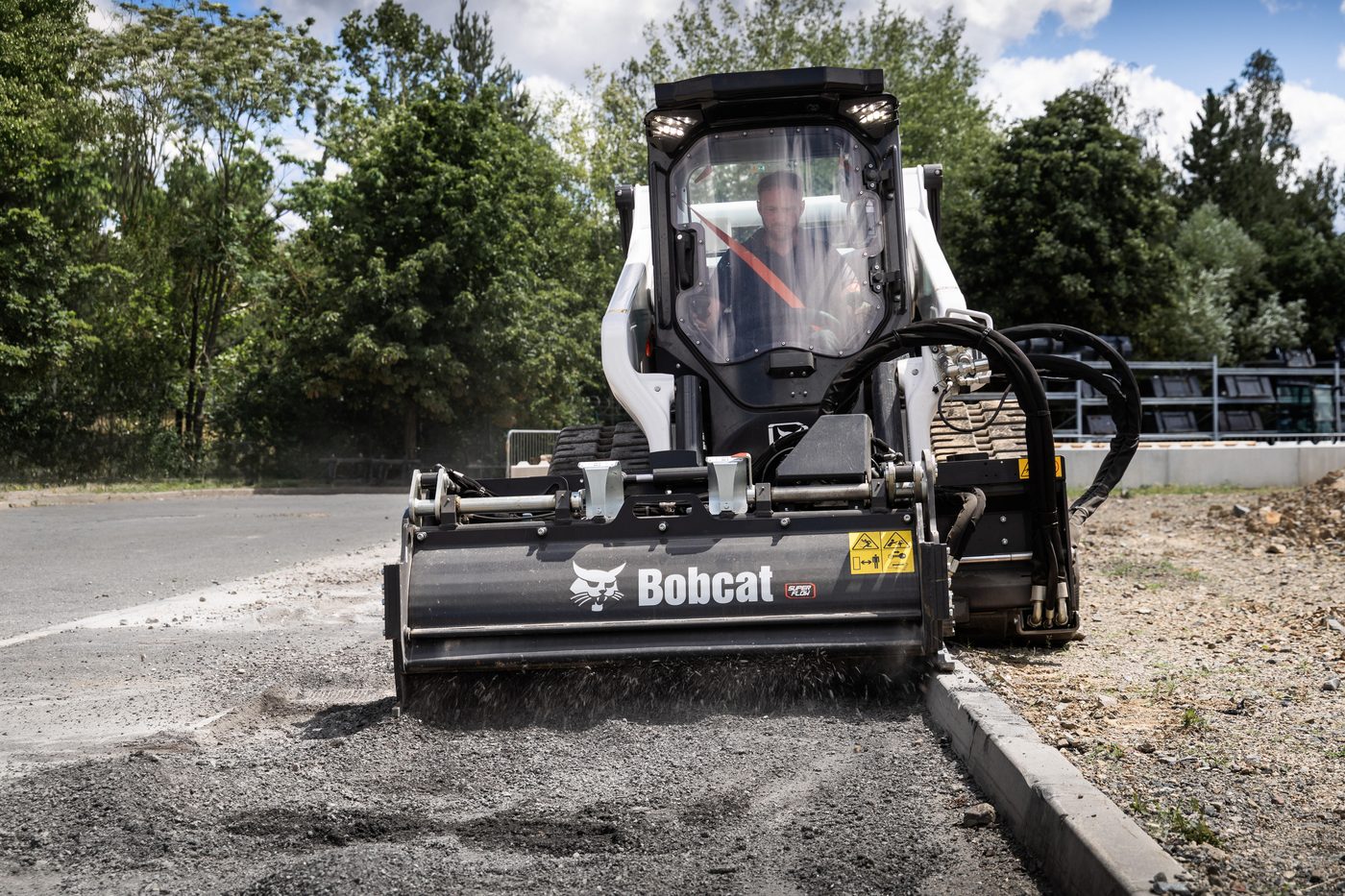
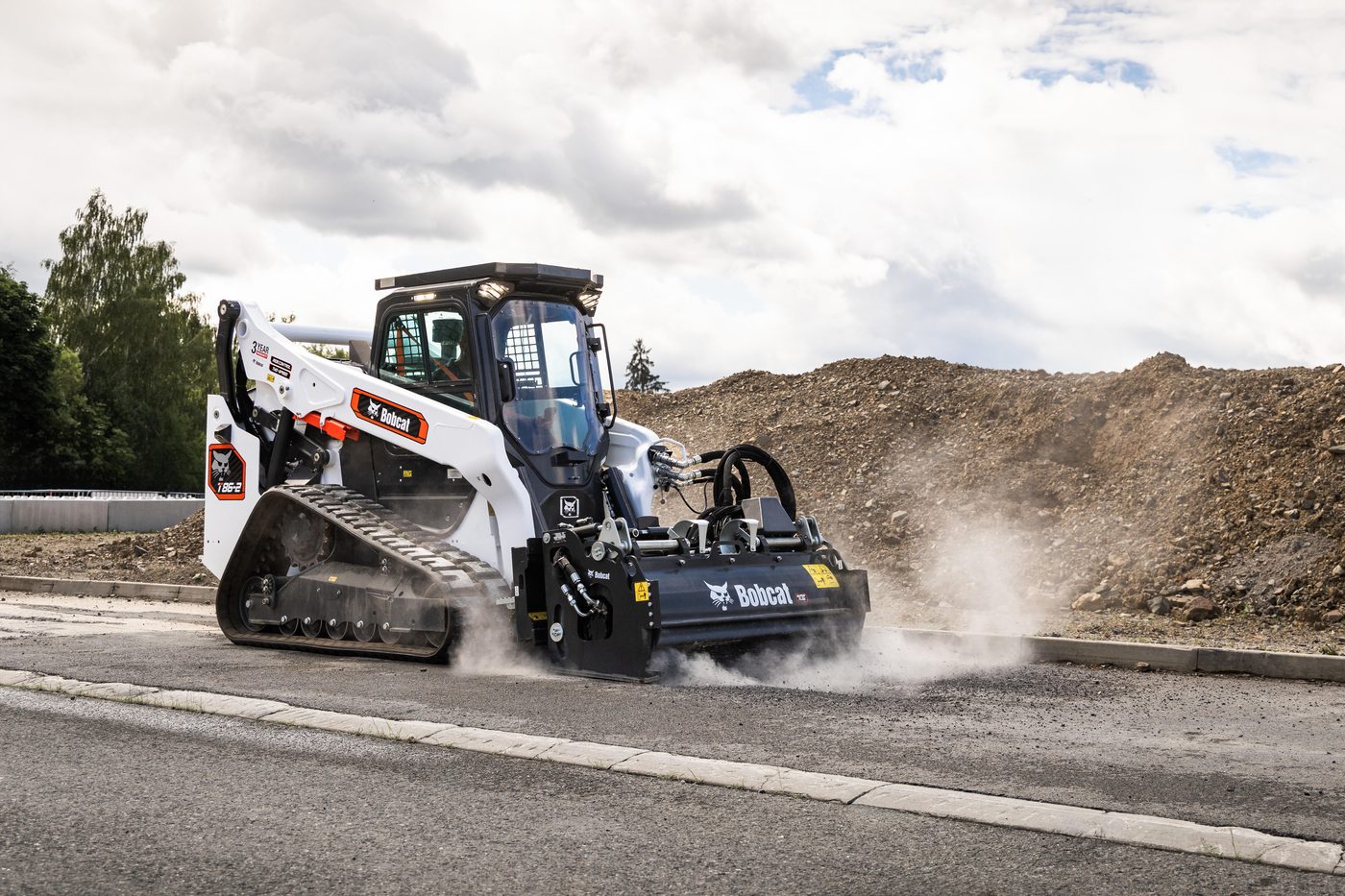
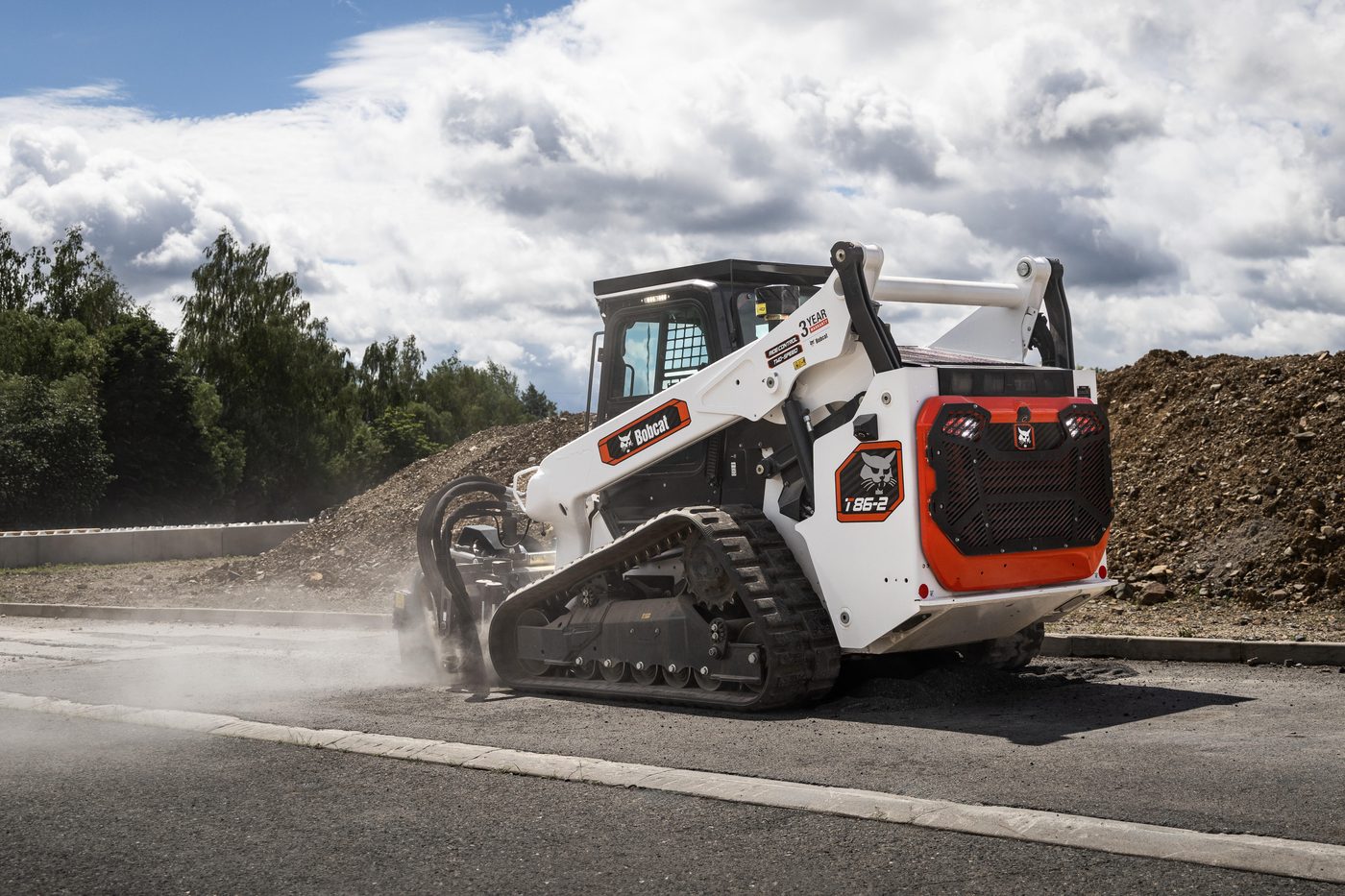
Photos: Bobcat comparison tests. CAT 265 overview photo: CAT.
Data checked 25.09.2026. Manufacturers may change their data; figures for a specific machine depend on its configuration.




Ehitajate tee 107A
13514 Tallinn Eesti
 +372 6 511 330
+372 50 27 368
+372 6 511 330
+372 50 27 368
 bobcat@bobcat.ee