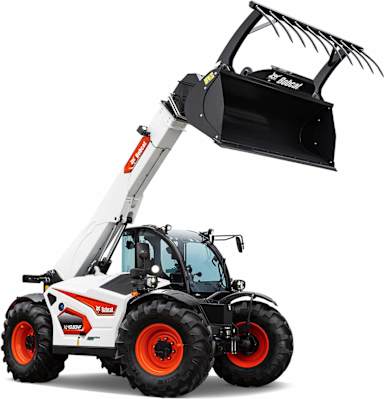
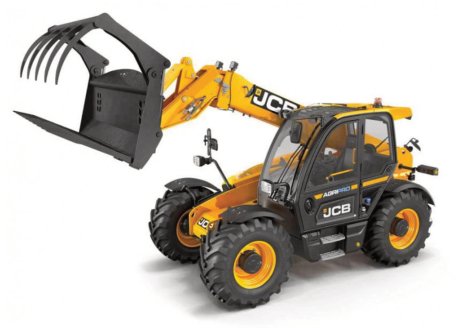
Telehandlers
Data: manufacturers and Bobcat's comparison tests. Does your experience say otherwise? Tell us ↓
| Parameter | Bobcat TL43.80HF | JCB 542-70 |
|---|---|---|
| Capacity and weight | ||
| Operating weight kg | 8,180 | 8,300 |
| Max. lift capacity kg | 4,300 | 4,200 |
| Capacity at max. height kg | 1,800 at 7,520 mm | 2,500 at 7,010 mm |
| Capacity at max. forward reach kg | 1,600 | 1,575 |
| Working range | ||
| Max. lift height mm | 7,520 | 7,010 |
| Max. forward reach mm | 4,022 | 3,760 |
| Bucket dump angle at full height ° | 51 | 52 |
| Fork crowd angle ° | 17 | 12 |
| Engine | ||
| Engine | Bobcat D34, 101 kW / 135 hp | JCB, 97 kW / 130 hp |
| Transmission | hydrostatic, auto-shift, dynamic and soft modes | torque converter powershift, 6 gears (4–6 automatic) |
| Dimensions | ||
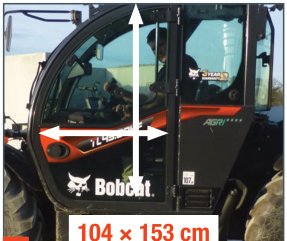
| Door opening (width × height) cm | 104 × 153 | 98 × 143 |
The table combines manufacturers' data and measurements from Bobcat's comparison tests (12-2024).
Tested configurations: Bobcat TL43.80HF Agri****, JCB 542-70 Agri Super.
— means the manufacturer does not publish this figure.
At the rates measured in Bobcat's loading test: about 9 hours and 90 litres of fuel with the TL43.80HF, 11.9 hours and 125 litres with the 542-70.
Calculation: 1,000 ÷ 111 = 9.0 h; 1,000 ÷ 11.12 = 90 l · 1,000 ÷ 84 = 11.9 h; 1,000 ÷ 8.01 = 125 l
At 7 m height the TL43.80HF has 1.40 m of usable forward reach, the 542-70 0.48 m: at that height the 542-70 cannot set a pallet or bale down beyond its front.
The TL43.80HF's hydrostatic drive brakes the machine through the transmission. The 542-70's torque converter lets it roll on slopes, so the service brakes take the load.
Fork crowd angle is 17° on the TL43.80HF and 12° on the 542-70: the forks tilt back 5° more to keep the load on over bumps.
Calculation: 17° − 12° = 5°
Measurements and notes come from Bobcat's comparison tests (12-2024), in which both machines did the same jobs. These figures are not in the manufacturers' brochures. “Operator's opinion” is the personal impression of the operator who worked in the test: it is subjective, and your experience may differ.
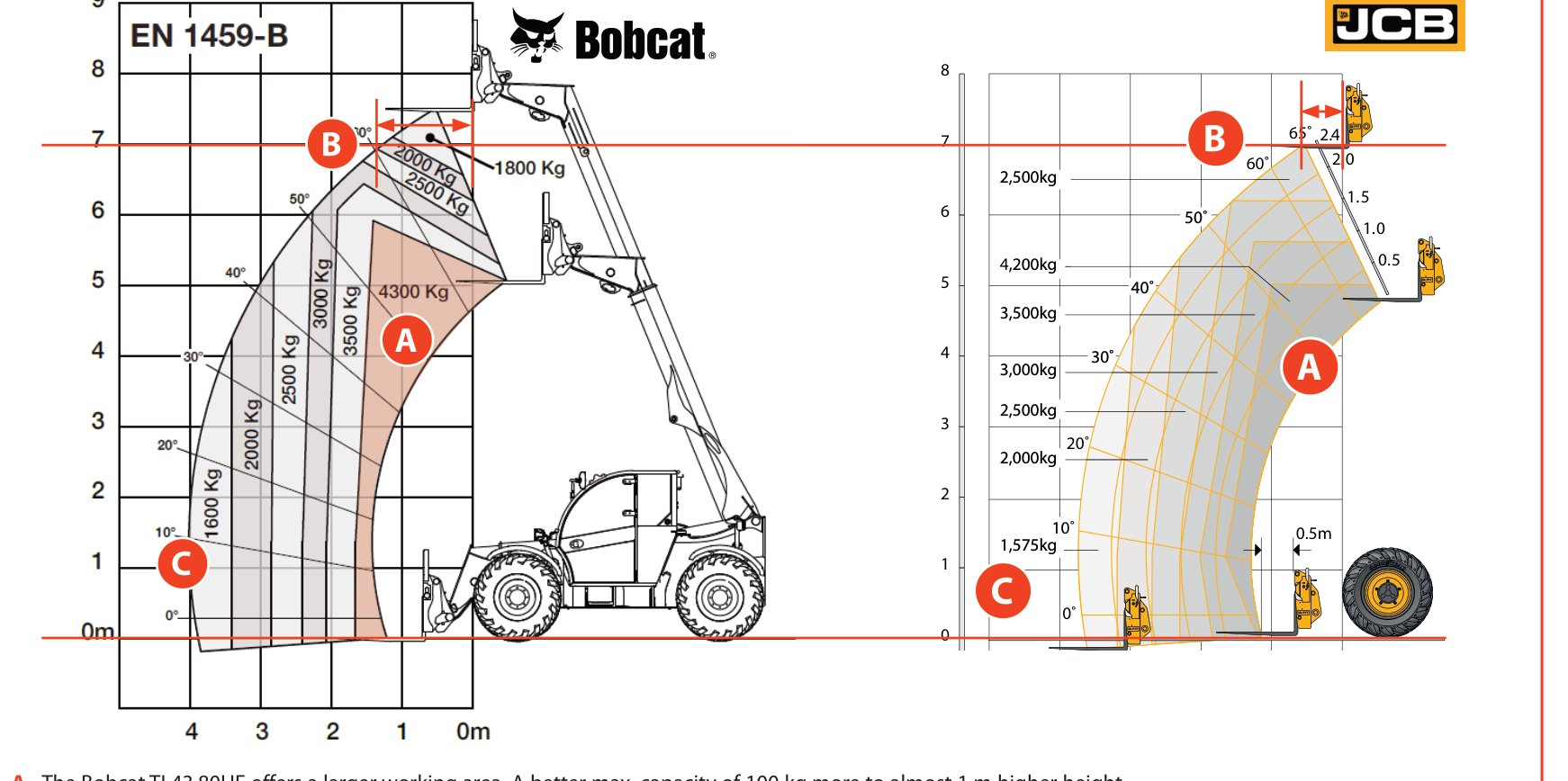
What it affects: Usable reach at height decides whether a load can be placed on top of a stack or into a trailer, not only lifted.
Operator's opinionsubjectiveDirection changes came without jolts.
Operator's opinionsubjectiveThe 5–6 shift was abrupt, and forward/reverse changes jolted the machine, spilling material from the bucket.
What it affects: In loading work the machine changes direction hundreds of times an hour; smooth reversing keeps material in the bucket and reduces wear.
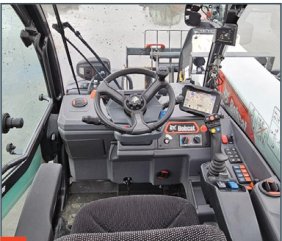
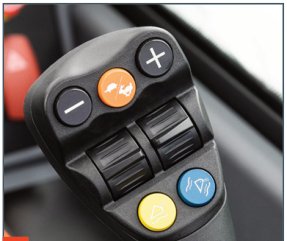
Operator's opinionsubjectiveA large part of the joystick travel produced no movement, which made precise boom control harder.
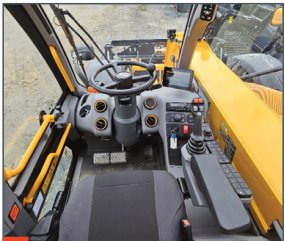
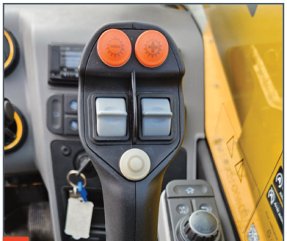
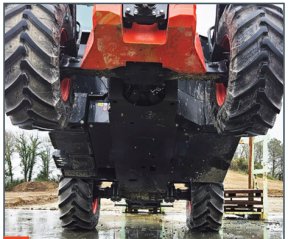
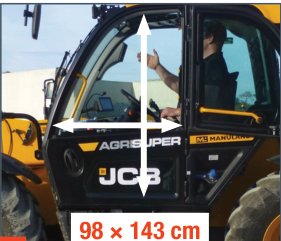
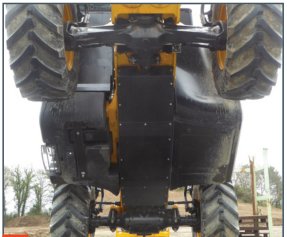
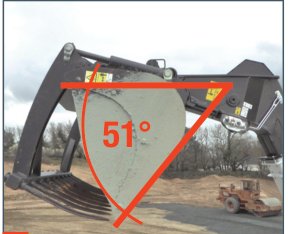
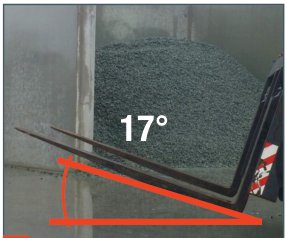
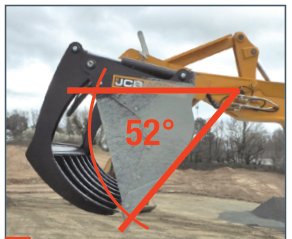
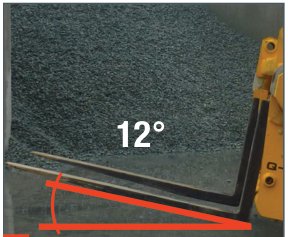
What it affects: A steep dump angle empties the bucket without shaking; a larger crowd angle keeps loads on the forks on rough ground.
| Bobcat TL43.80HF | JCB 542-70 | |
|---|---|---|
| Bucket volume | 888 l | 822 l |
| Material loaded per hour | 111 m³ | 84 m³ |
| Fuel used per hour | 9.98 l | 10.51 l |
| Material per litre of fuel | 11.12 m³ | 8.01 m³ |
Tested configurations: TL43.80HF Agri****, JCB 542-70 Agri Super.
What it affects: Fuel per hour tells you what the machine burns; fuel per cubic metre loaded tells you what the work costs. That figure and cycles per hour set the fuel and machine hours per job — your operating cost.
Bobcat comparison test: both machines did the same job with the same material. Results are indicative — they depend on the operator, the material and the site.
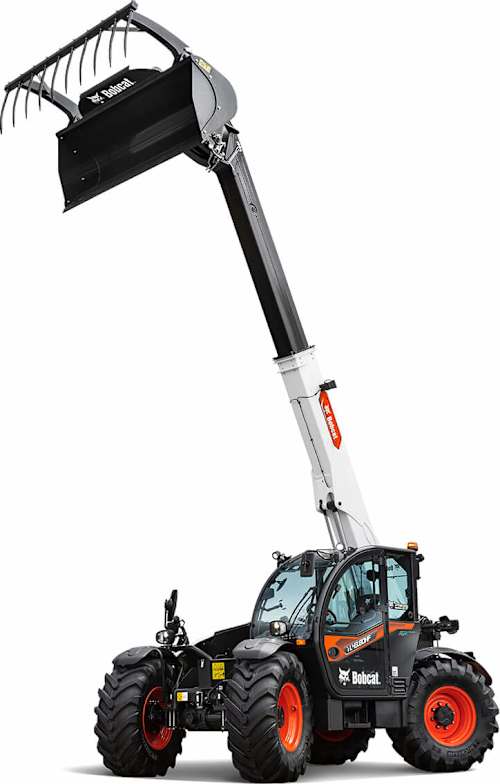
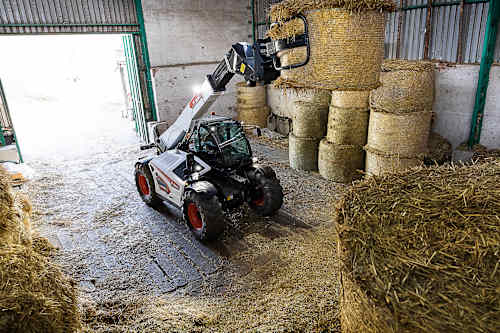
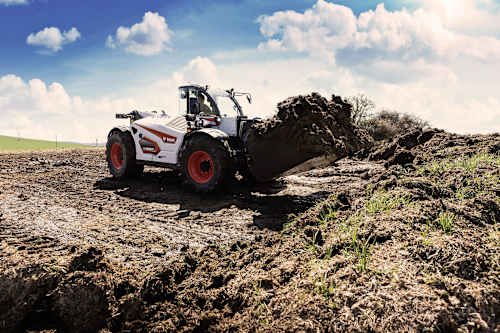
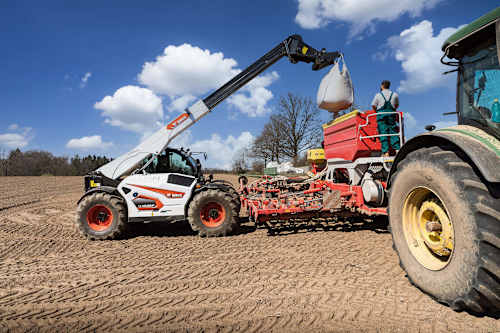
Photos: Bobcat comparison tests. JCB 542-70 overview photo: JCB.
Data checked 25.09.2026. Manufacturers may change their data; figures for a specific machine depend on its configuration.




Ehitajate tee 107A
13514 Tallinn Eesti
 +372 6 511 330
+372 50 27 368
+372 6 511 330
+372 50 27 368
 bobcat@bobcat.ee